
EigenLayer is redefining the boundaries of Ethereum security by introducing the concept of restaking - a mechanism that lets validators leverage their staked ETH or liquid staking tokens (LSTs) to secure not just Ethereum, but a growing ecosystem of decentralized protocols. This innovation is transforming DeFi security infrastructure by enabling capital efficiency and multi-chain protection, without requiring additional collateral from participants.
Restaking: The Engine Behind Multi-Chain DeFi Security
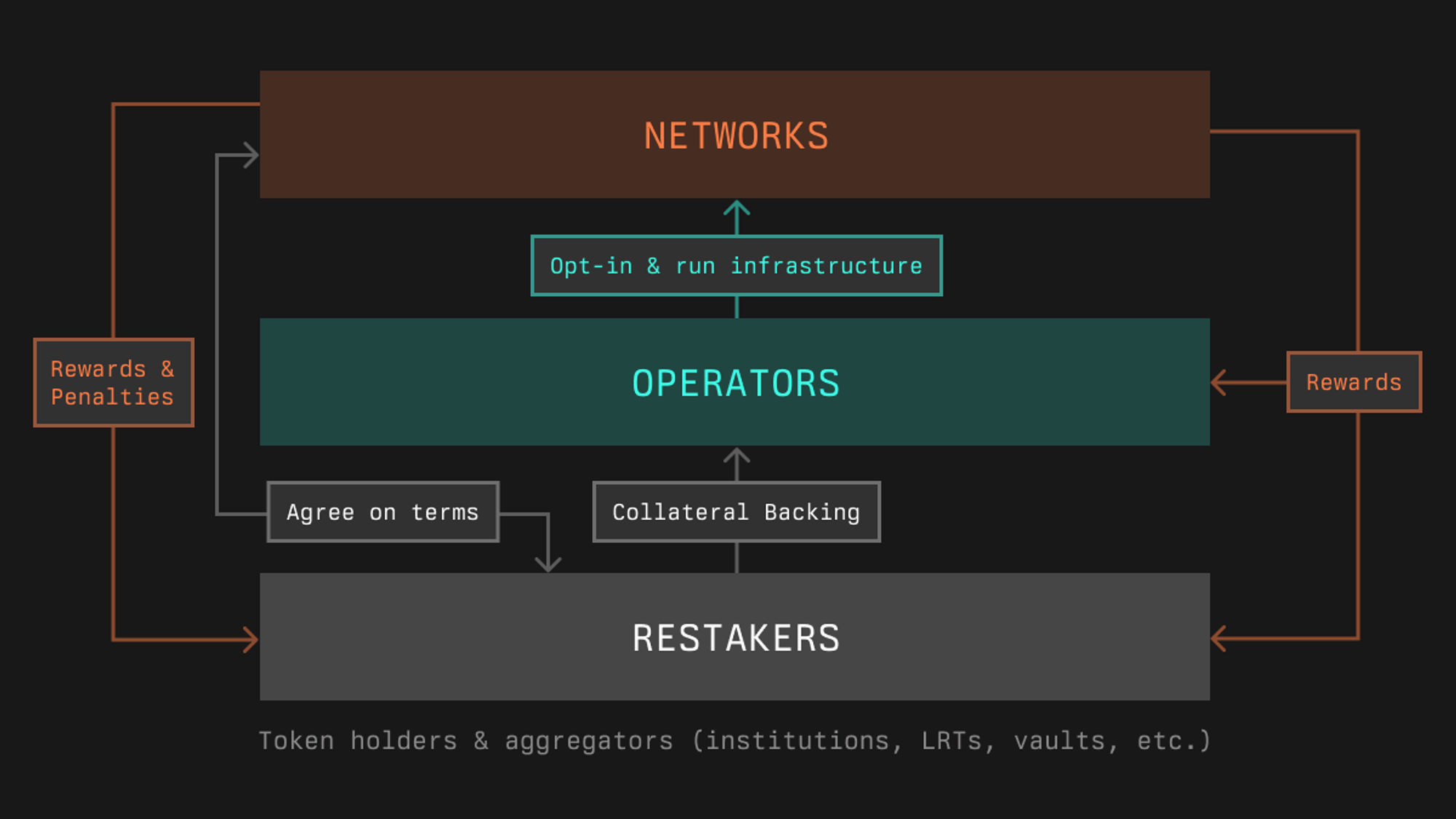
Traditional staking models on Ethereum have been effective for securing the mainnet, but they lock up capital for a single purpose. EigenLayer’s restaking protocol flips this paradigm. By allowing validators to "restake" their existing ETH or LSTs, it enables them to provide cryptoeconomic security for multiple Actively Validated Services (AVSs) simultaneously. These AVSs range from data availability layers to cross-chain bridges and oracle networks.
This multi-protocol security model means that DeFi protocols can tap into a shared pool of staked assets, significantly raising the cost for potential attacks while reducing bootstrapping costs for new projects. Instead of each protocol sourcing its own set of validators and collateral, they inherit Ethereum’s robust validator set through EigenLayer. That’s why EigenLayer restaking security is quickly becoming foundational in the emerging multi-chain DeFi landscape.
How Restakers Boost Yields and Protocol Resilience
The incentives are clear for both validators and protocols. Validators can earn layered rewards by supporting multiple AVSs with their existing staked ETH or LSTs - effectively multiplying their yield streams without deploying extra capital. For protocols, this model delivers instant access to a deep base of economic security and experienced operators.
Recent integrations highlight this trend. Networks like Mantle and ZKsync have adopted EigenLayer’s data availability solutions, allowing their AVSs to operate with Ethereum-grade security while benefiting from faster transaction speeds and lower operational costs. As more Layer 2s and sidechains plug into this ecosystem, the value proposition compounds for both restakers and protocol builders.
Cross-Chain Expansion: Securing Layer 1s and Layer 2s Alike
The most compelling development in 2025 is EigenLayer’s push beyond Ethereum mainnet. Through partnerships such as Arithmic Network, EigenLayer is extending its restaking capabilities across both Layer 1 and Layer 2 chains. Now, provers, verifiers, validators, and sequencers on these networks can harness the same pool of restaked ETH or LSTs to secure new infrastructure components - all under one unified cryptoeconomic umbrella.
This expansion not only enhances multi-chain DeFi security, but also drives network effects across chains as more protocols opt-in for shared security guarantees via EigenLayer’s AVS framework. The result? A modular yet deeply interconnected web of trust that reduces fragmentation risk in decentralized finance.
As EigenLayer’s restaking architecture matures, the economic calculus for both validators and DeFi protocols is shifting. Validators now have strategic optionality: allocate staked ETH or LSTs to AVSs with the highest risk-adjusted rewards, or diversify across multiple services to optimize for both yield and resilience. Protocols, in turn, can bootstrap security at a fraction of historical costs, sidestepping the cold start problem that has plagued new DeFi launches for years.
Importantly, this shared security model doesn’t dilute accountability. EigenLayer’s slashing and enforcement mechanisms ensure that validators remain economically aligned with the protocols they secure. If a validator misbehaves on any supported AVS, their restaked collateral is at risk across all connected networks, a powerful deterrent that underpins the credibility of the entire multi-chain ecosystem.
Operational Impact: What Restakers and Builders Need to Know
The operational implications are profound. For validators, restaking requires robust infrastructure management, operating nodes for multiple AVSs often means more complex uptime guarantees and monitoring requirements. However, modern validator tooling is rapidly evolving to abstract away much of this complexity, making multi-AVS participation increasingly accessible even for smaller operators.
For protocol builders, integrating with EigenLayer’s AVS framework offers a fast track to institutional-grade security without reinventing consensus or validator recruitment. This model is especially attractive for projects deploying on Layer 2s or launching new data availability layers, verticals where capital efficiency and rapid scaling are paramount.
Looking Ahead: The Future of DeFi Security Infrastructure
The next frontier is seamless interoperability between chains secured by restaked ETH. As EigenLayer’s partnerships with networks like Mantle, ZKsync, and Arithmic Network deepen, expect new primitives, cross-chain bridges with shared slashing conditions, decentralized sequencers coordinating rollups across L1s and L2s, to emerge atop this unified security layer.
This evolution positions EigenLayer AVS as core infrastructure not just for Ethereum-native protocols but also for a broader multi-chain DeFi universe. Ultimately, as more economic value flows through these interconnected systems, the cost to attack any single protocol rises exponentially, delivering systemic resilience that benefits users across the board.
For those looking to dive deeper into how this model reduces bootstrapping costs or enhances validator alignment in practice, our guides on reducing bootstrapping costs and validator security enhancements provide actionable frameworks.




No comments yet. Be the first to share your thoughts!