

In the fast-paced world of Ethereum restaking, the EigenLayer DataHaven integration stands out as a game-changer for decentralized storage. DataHaven, now operating as an Autonomous Verifiable Service (AVS), taps into EigenLayer's shared security model to deliver verifiable storage solutions. This means Ethereum restaking operators can secure data operations with their staked ETH, inheriting the network's robust economic guarantees. As ETH trades at $1,868.44, down 5.42% in the last 24 hours, this partnership arrives at a moment when restaking yields are under scrutiny amid market volatility.
EigenLayer's restaking protocol allows validators to repurpose their ETH collateral beyond Ethereum's consensus, extending trust to specialized services like DataHaven's storage. Operators change their withdrawal credentials to EigenLayer contracts and opt-in to DataHaven duties, running custom software to verify storage proofs. Malfeasance triggers slashing, aligning incentives with network integrity. This EigenLayer verifiable storage AVS setup not only bolsters data reliability but also opens new revenue streams for operators seeking diversified restaking opportunities.
Decoding DataHaven's Role in EigenLayer's Ecosystem
DataHaven brings private, verifiable storage to the table, complementing EigenLayer's expanding suite of AVSs. Unlike traditional decentralized storage networks that rely on separate token economies, DataHaven leverages restaked ETH for security, sidestepping bootstrapping challenges. Operators validate storage operations, ensuring data availability and correctness through cryptographic proofs. This integration, detailed in DataHaven's documentation, exemplifies how restaking scales Ethereum's security to off-chain primitives without diluting core consensus protections.
DataHaven extends this architecture as an actively validated service (AVS) secured by EigenLayer's ETH restaking protocol.
From a research perspective, this move addresses a critical gap in Web3 infrastructure. Verifiable storage is foundational for AI agents and compute-heavy dApps, areas where EigenCloud shines with its deterministic inference and high-throughput data layers. The DataHaven EigenCloud partnership fuses storage with compute, creating an end-to-end trust stack. Operators gain exposure to AI-driven demand, potentially stabilizing restaking economics as Ethereum's ecosystem matures.
Operator Incentives and the Slashing Mechanism
For Ethereum restaking operators, the appeal lies in the precise incentive structure. By supporting DataHaven's AVS, they earn rewards proportional to staked ETH committed, balanced against slashing risks for downtime or invalid proofs. This shared security model, akin to Ethereum's proof-of-stake, enforces accountability at scale. Dive deeper into the economic model, incentives, and slashing breakdown to understand how it safeguards EigenLayer operator data security.
Current dynamics show ETH at $1,868.44, reflecting broader market pressures, yet restaking TVL remains resilient. Operators must weigh yield opportunities against volatility; DataHaven's integration could tip the scales by diversifying slashing vectors beyond compute AVSs. My take: this isn't just incremental; it's a blueprint for restaking's next phase, where storage joins rollups and oracles in securing Ethereum's middleware.
Implications for AI Agents and Beyond
Looking ahead, the Ethereum restaking AI agents narrative gains traction through this synergy. EigenCloud's verifiable compute pairs seamlessly with DataHaven's storage, enabling trust-minimized AI workflows. Imagine agents processing private data with provable integrity, backed by billions in restaked ETH. As Delphi Digital notes, EigenLayer extends Ethereum's trust, and DataHaven amplifies that for data-intensive apps.
Ethereum (ETH) Price Prediction 2027-2032
Forecast factoring EigenLayer DataHaven AVS integration, restaking growth, and Ethereum ecosystem advancements (Baseline 2026: $1,868)
| Year | Minimum Price | Average Price | Maximum Price | YoY % Change (Avg) |
|---|---|---|---|---|
| 2027 | $2,200 | $3,000 | $4,500 | +60% |
| 2028 | $4,000 | $6,500 | $10,000 | +117% |
| 2029 | $3,500 | $5,000 | $7,000 | -23% |
| 2030 | $6,000 | $8,500 | $12,000 | +70% |
| 2031 | $8,000 | $11,000 | $16,000 | +29% |
| 2032 | $10,000 | $14,000 | $20,000 | +27% |
Price Prediction Summary
ETH prices are projected to grow progressively from 2027-2032, driven by restaking integrations like DataHaven AVS on EigenLayer, with average prices potentially reaching $14,000 by 2032 amid bull cycles, adoption surges, and tech upgrades. Min/max ranges reflect bearish corrections and bullish peaks.
Key Factors Affecting Ethereum Price
- Restaking adoption via EigenLayer AVS (e.g., DataHaven verifiable storage) enhancing ETH security and utility
- Ethereum scalability upgrades and L2 growth
- Institutional inflows and regulatory clarity
- Crypto market cycles (bull peaks ~2028, 2032)
- Competition from L1s and macroeconomic factors
- AI/compute integrations boosting demand for restaked ETH
Disclaimer: Cryptocurrency price predictions are speculative and based on current market analysis. Actual prices may vary significantly due to market volatility, regulatory changes, and other factors. Always do your own research before making investment decisions.
Operators should monitor adoption metrics closely. Early signals from X discussions highlight excitement around this combo, positioning it as a catalyst for Web3's app and AI era. With ETH dipping to a 24-hour low of $1,854.53, strategic restaking into proven AVSs like DataHaven offers a hedge against spot price swings.
Restaking operators eyeing this space should prioritize AVS diversification. DataHaven's verifiable storage adds a layer of resilience, particularly as demand for secure data layers surges in AI and DeFi. With Ethereum's price holding at $1,868.44 after a 24-hour high of $1,981.94, the protocol's TVL underscores investor confidence despite the dip.

How Operators Activate DataHaven Duties
Getting started with DataHaven as an EigenLayer operator involves straightforward steps, but demands technical precision. First, ensure your Ethereum validator is restaking via EigenLayer contracts. Then, opt-in specifically to DataHaven's AVS by depositing commitments and deploying their node software. This software handles storage proof verification, challenging invalid proofs through Ethereum's dispute resolution. Rewards accrue based on uptime and successful validations, with slashing calibrated to match Ethereum's severity for faults.
Opt-In to DataHaven AVS: Secure Ethereum Restaking for Operators

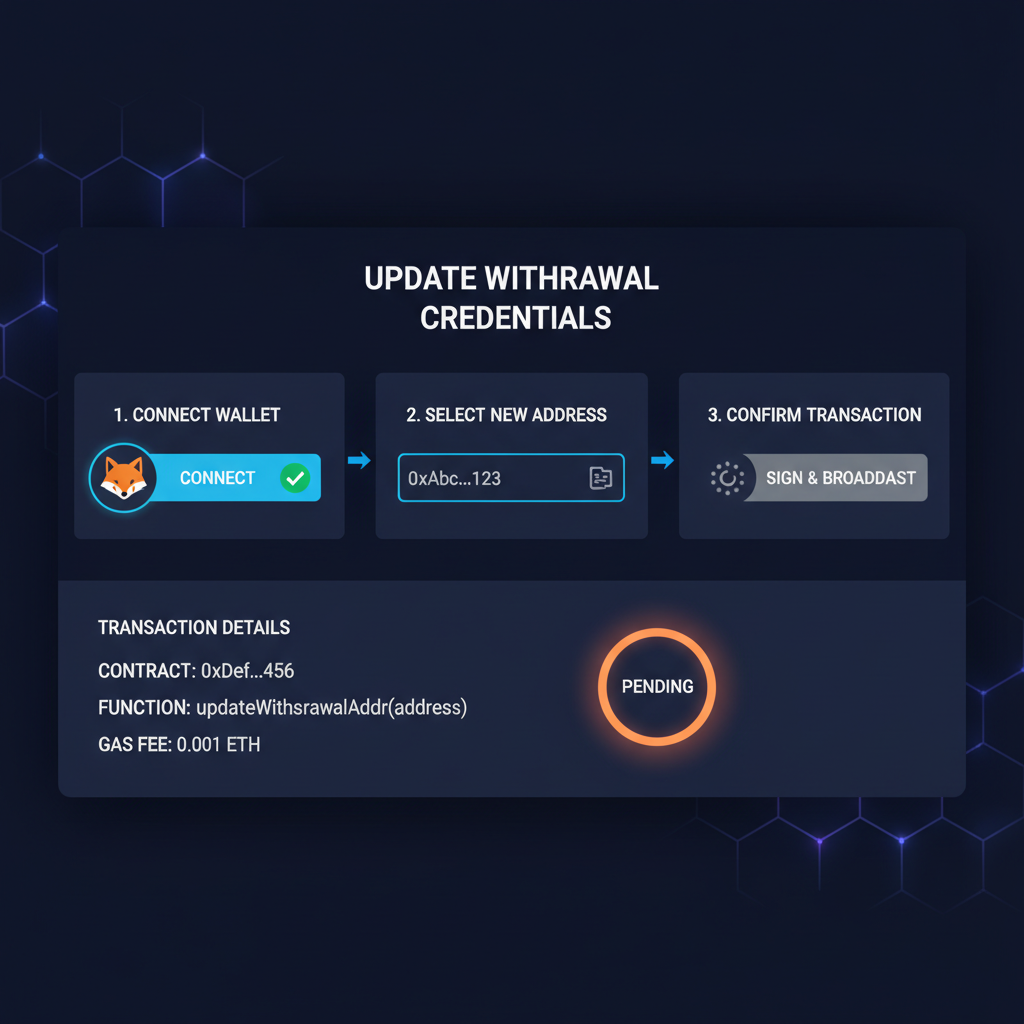

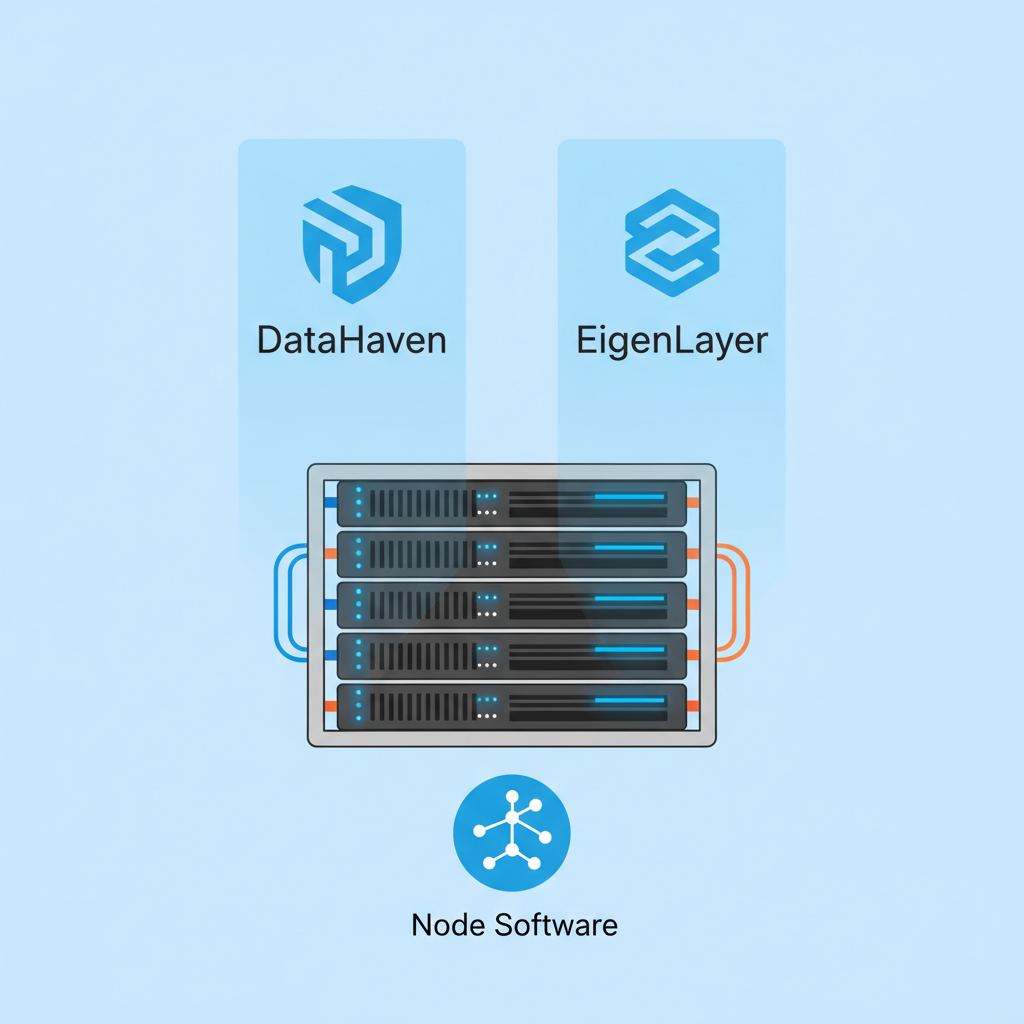

Research from sources like Consensys highlights restaking as an onchain primitive akin to rehypothecation, but DataHaven refines it for storage-specific duties. Operators benefit from shared security economics, where restaked ETH at current valuations amplifies yield potential without isolated token risks.
Navigating Risks in the EigenLayer DataHaven Setup
Balanced against rewards, operators face nuanced risks. Storage proofs introduce novel slashing vectors: faulty availability checks or collusion could trigger penalties, potentially more frequent than oracle disputes. Yet, DataHaven's design, inheriting Ethereum's economic security, mitigates this through operator dispersion requirements. As ETH volatility persists, with a 24-hour change of -5.42%, savvy operators calibrate commitments to balance exposure.
My analysis, drawing from Delphi Digital's framing of EigenLayer as trust extension, suggests DataHaven fortifies this for data-heavy use cases. Early adopters gain first-mover advantages in EigenLayer operator data security, but scale demands vigilant monitoring of network parameters.
FAQ: Key Questions on EigenLayer Verifiable Storage AVS
This integration signals restaking's maturation, bridging compute and storage under EigenLayer's umbrella. For blockchain professionals, it underscores a shift toward composable security primitives. As Ethereum navigates market headwinds, with prices stabilizing post-low of $1,854.53, DataHaven positions operators at the forefront of verifiable infrastructure. The real test lies in adoption velocity and real-world AI deployments, but the foundation is solid, backed by Ethereum's proven stake model.
Stakeholders should track EigenCloud updates, where DataHaven complements verifiable AI inference. This isn't hype; it's infrastructure evolution, rewarding those who restake strategically amid flux.




No comments yet. Be the first to share your thoughts!