
EigenLayer in 2026: The Restaking Foundation
EigenLayer operates as a decentralized protocol on Ethereum that introduced restaking as a core primitive. In 2026, it functions primarily as a "marketplace for trust," allowing users to reuse their staked ETH to secure additional services beyond the base Ethereum network. This mechanism has evolved from a simple yield strategy into the foundational infrastructure for modular AI and zero-knowledge (ZK) compute markets.
By 2026, EigenLayer held approximately 94% of the restaking market share, with over $15 billion in total value locked (TVL). This dominance stems from its ability to decouple security from specific applications. Instead of running separate validator nodes for every new service, developers can tap into the existing security pool of EigenLayer’s operators. This reduces the barrier to entry for new protocols and concentrates economic security in a single, robust layer.
The protocol’s shift toward verifiable cloud computing marks its current trajectory. Rather than focusing solely on financial interoperability, EigenLayer now powers the heavy lifting required for AI inference and ZK-proof generation. Operators provide the computational resources, while restakers provide the economic security, creating a hybrid model that supports both decentralized storage and high-performance computing tasks.
Eigenlayer 2026 choices that change the plan
EigenLayer has solidified its position as the dominant restaking protocol on Ethereum, capturing roughly 94% of the market with over $15 billion in total value locked. This dominance creates a "marketplace for trust" where operators can reuse their security to support multiple networks simultaneously. However, this concentration of power introduces specific tradeoffs that participants must evaluate carefully.
The primary benefit of restaking is capital efficiency. Instead of securing a single chain, your staked ETH supports a suite of infrastructure services, including modular AI and zero-knowledge compute markets. This multiplies the potential yield from a single position. Yet, this efficiency comes with increased complexity. The more services you restake for, the larger your exposure to slashing events. If an operator misbehaves on any supported network, your entire restaked balance is at risk, not just the portion allocated to that specific service.
Liquidity and exit flexibility are also critical considerations. While restaking yields can be attractive, your assets are often locked or require a withdrawal queue to exit. This illiquidity can be a disadvantage during market downturns when immediate access to capital is valuable. Additionally, the technical barrier to entry is higher than standard staking. Users must understand the specific risk profiles of each Actively Validated Service (AVS) they choose to support.
To help visualize these tradeoffs, consider the following comparison of standard Ethereum staking versus restaking:
| Feature | Standard ETH Staking | EigenLayer Restaking |
|---|---|---|
| Security Scope | Single Chain | Multi-Service / Modular |
| Potential Yield | Base ETH APR | Base + AVS Incentives |
| Slashing Risk | Low (Single Layer) | Higher (Cumulative Risk) |
| Liquidity | High (Liquid Staking) | Variable / Often Locked |
| Technical Complexity | Low | High |
How to Decide If EigenLayer Fits Your Strategy
EigenLayer is no longer just about earning extra yield on staked ETH; it has become the infrastructure layer for modular AI and zero-knowledge compute. With over $15 billion in total value locked and roughly 94% of the restaking market share, the protocol now functions as a "marketplace for trust" where validators provide security to auxiliary networks known as Actively Validated Services (AVSs) [[src-serp-1]][[src-serp-2]]. Choosing to participate requires evaluating risk tolerance against the potential for higher yields and protocol influence.
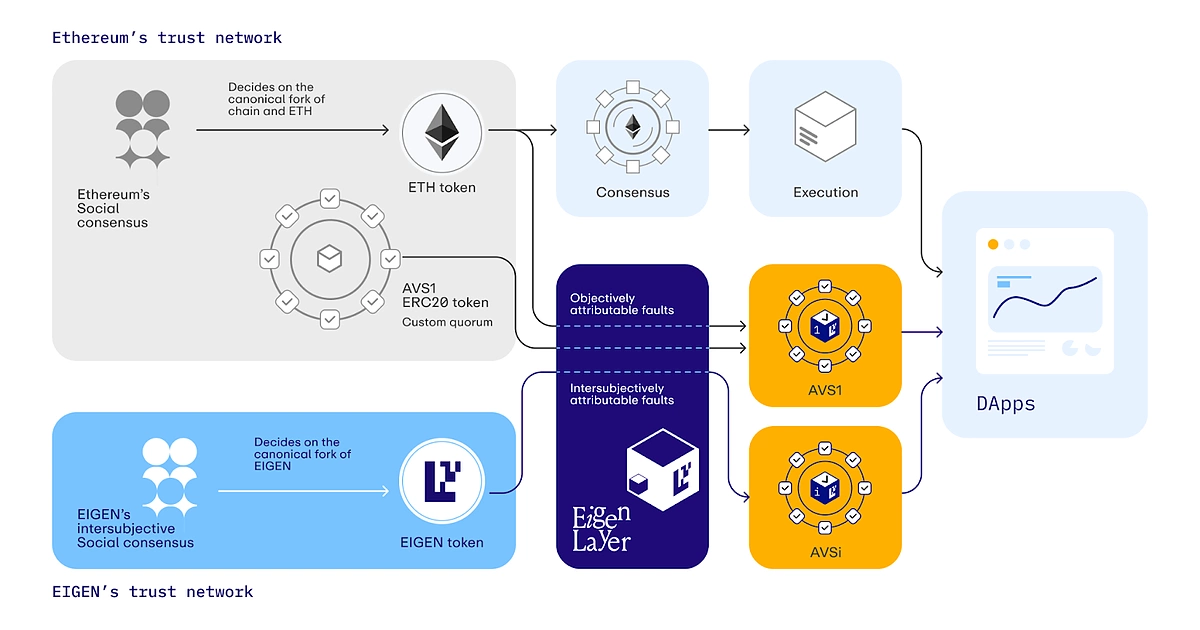
Restaking amplifies rewards but also concentrates risk. If an AVS you support violates its protocol rules, your staked ETH can be slashed. Before committing capital, review the historical slashing records of specific AVSs and understand the economic penalties. High-yield AVSs often carry higher slashing probabilities, so your decision should hinge on whether you are comfortable with this binary outcome.
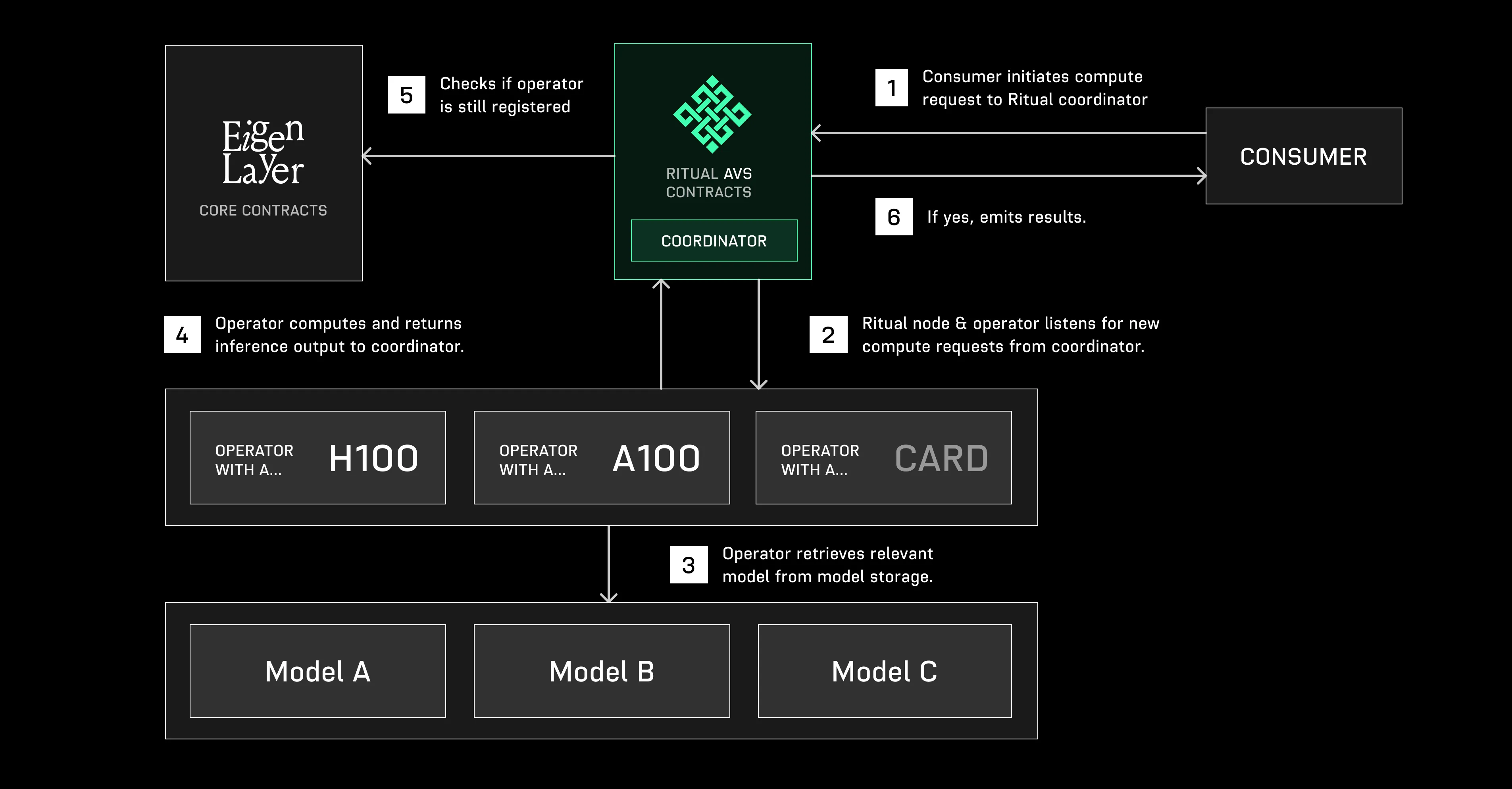
EigenLayer supports diverse workloads, from AI inference to ZK-proof generation. Choose AVSs that match your technical comfort level and long-term belief in the sector. For example, supporting an AI compute AVS requires understanding GPU availability and latency requirements, while ZK-compute AVSs focus on proof verification speed. Diversifying across different AVS types can mitigate the risk of a single sector failing.
Nominal APYs can be misleading. Factor in the AVS operator fees, EigenLayer protocol fees, and the potential cost of slashing. Use the current EIGEN price and ETH staking rates to model your net return. A conservative estimate should assume a low-frequency slashing event to ensure your strategy remains profitable even under adverse conditions.
The EigenLayer ecosystem is evolving rapidly with new AVSs launching regularly. Stay updated on protocol upgrades and governance proposals that may change restaking parameters. Regularly review the on-chain data for your chosen AVSs to ensure they remain active and secure. Sudden drops in participation or unusual on-chain activity can signal underlying issues.
Avoid putting all your staked ETH into a single AVS. Spread your exposure across multiple AVSs with different risk profiles and use cases. This approach reduces the impact of any single AVS failure or slashing event. Consider allocating a portion of your portfolio to more established AVSs with lower yields but higher security guarantees.
Watch out for misleading claims and weak options
EigenLayer dominates the restaking market with over $15 billion in total value locked, yet the narrative around its capabilities often outpaces its actual utility. As the protocol shifts toward verifiable cloud services for AI and ZK-compute markets, it is critical to distinguish between marketing hype and technical reality. Many projects leverage EigenLayer’s "trust marketplace" label to imply broad compatibility, but most restaked assets remain tethered to Ethereum’s base layer security rather than offering independent, modular compute power.
A common mistake is assuming that all restaking options are created equal. The protocol holds roughly 94% of the restaking market, which creates significant centralization risks. If a single operator set fails or acts maliciously, the entire restaked ecosystem could face correlated slashing events. This concentration of power means that "decentralized" compute services built on top of EigenLayer are only as secure as the Ethereum validators backing them.
When evaluating EigenLayer-based solutions, focus on the specific attestation mechanisms and slashing conditions. Avoid projects that promise "seamless" integration without detailing their fault-proof systems. The real value lies in verifiable compute, not just capital efficiency. Always verify if the service provider has undergone independent audits and if their economic security model can withstand a worst-case scenario where multiple operators fail simultaneously.
Eigenlayer 2026: frequently asked: what to check next
What is EigenLayer and how does restaking work?
EigenLayer is a protocol built on Ethereum that allows users to "restake" their existing staked ETH or liquid staking tokens (LSTs) to secure additional services beyond the base Ethereum network. Rather than locking capital for a single purpose, restaking creates a "marketplace for trust" where the same cryptographic security backs multiple layers, such as modular AI inference networks or zero-knowledge (ZK) compute markets. This mechanism significantly increases capital efficiency by allowing a single unit of ETH to generate yield from multiple sources simultaneously.
Is EigenLayer safe to use in 2026?
EigenLayer holds approximately 94% of the restaking market share with over $15 billion in total value locked (TVL) as of early 2026, making it the dominant infrastructure for modular blockchain security. However, restaking introduces "slashing" risks, where validators can lose their staked funds if they act maliciously or fail to perform their duties across any of the secured services. While the protocol has matured, users must carefully review the specific "restake contracts" they interact with, as risk levels vary significantly between different AVS (Actively Validated Services) providers.
What is the EIGEN token unlock schedule?
Token supply dynamics remain a key factor for price stability. An imminent $7.63 million token unlock is scheduled for August 1, 2026, with a larger 36.82 million token unlock also set for the same date. These unlocks increase the circulating supply, which can create downward pressure on the EIGEN price if demand from restakers and AVS operators does not absorb the new tokens. Investors should monitor these dates closely, as they often correlate with increased volatility in the short term.
How much can I earn from restaking on EigenLayer?
Yields vary widely depending on the specific AVS you choose to support. Base yields come from Ethereum staking, while additional returns are generated by the services secured by your restaked ETH. In 2026, high-demand services like ZK-compute and AI verification have offered competitive premiums, but these are not guaranteed. Returns fluctuate based on network usage, slashing events, and the overall demand for security from new modular blockchain projects. Always compare the risk-adjusted returns across different AVS providers rather than chasing the highest nominal APY.
No comments yet. Be the first to share your thoughts!