
Eigenlayer restaking 2026 limits to account for
EigenLayer entered 2026 as the dominant restaking protocol on Ethereum, holding roughly 94% of the restaking market and over $15 billion in total value locked. The protocol has shifted its narrative from pure restaking to "verifiable cloud," allowing Ethereum validators to rent out their security to other networks and applications. This transition has made EigenLayer the backbone of modular security, but it also introduces new constraints for participants.
For validators, the primary constraint is slashing risk. Restaking means your ETH is securing multiple services simultaneously. If any one of those services fails or is compromised, your stake can be slashed. This is a significant departure from traditional staking, where your risk is limited to the Ethereum consensus layer. The 2026 environment has seen more sophisticated slashing mitigation tools, but the fundamental risk remains.
Another constraint is capital efficiency. While restaking allows you to earn multiple yield streams, it ties up your ETH in a complex web of dependencies. You cannot easily withdraw or unstake your ETH without going through a lengthy process that involves waiting for withdrawal queues and potentially facing market volatility during that period. This illiquidity is a key trade-off for the higher yields.
Eigenlayer restaking 2026 choices that change the plan
Restaking has become the default security model for modular blockchains, but it introduces specific risks that differ from standard staking. In 2026, with over $19 billion locked in EigenLayer, the tradeoffs between yield and risk are sharper than ever. Understanding these factors is essential before committing capital.
The primary benefit is yield augmentation. By restaking ETH, validators can earn rewards from multiple protocols simultaneously, effectively monetizing the same security layer. However, this comes with increased complexity. Your ETH is now exposed to "slashing" events across multiple networks. If one of the restaked protocols fails to meet its consensus requirements, your validator could be penalized, reducing your principal.
Liquidity is another major consideration. Unlike standard staking, where you can often withdraw or sell liquid staking tokens (LSTs) freely, restaked positions often lock your assets for longer periods or require complex unstaking processes. This illiquidity can be a disadvantage during market downturns when you might need to exit positions quickly.
To help evaluate these factors, the table below compares the key tradeoffs of EigenLayer restaking against traditional Ethereum staking.
| Feature | Traditional Staking | EigenLayer Restaking | Risk Profile |
|---|---|---|---|
| Yield Potential | Base ETH APY (~3-4%) | Base APY + Protocol Rewards | Low |
| Slashing Risk | Single Network Exposure | Multi-Protocol Exposure | High |
| Liquidity | High (via LSTs) | Moderate to Low | Medium |
| Complexity | Low | High | Medium |
The decision to restake depends on your risk tolerance. If you prioritize capital preservation, traditional staking remains the safer option. If you are comfortable with higher complexity and potential slashing risks for the chance of higher yields, restaking may be worth the tradeoff. Always ensure you understand the specific protocols you are restaking into and their security models.
How to evaluate EigenLayer strategies for 2026
EigenLayer entered 2026 as the dominant restaking protocol on Ethereum, holding roughly 94% of the restaking market and over $15 billion in total value locked [src-serp-2]. This dominance means that choosing the right restaking path is no longer about finding a niche player, but about selecting the correct configuration within the primary ecosystem. The platform has shifted from pure restaking to a "verifiable cloud" model, which changes how validators and users interact with the security it provides.
To navigate this landscape, you should treat restaking not as a passive income button, but as a modular security decision. The following steps outline a practical framework for evaluating your options, ensuring you understand the tradeoffs between yield, risk, and operational complexity.

Restaking introduces correlated risk. If the underlying Ethereum protocol faces a security breach, your restaked assets are also exposed. Evaluate whether you are comfortable with this layer of systemic risk or if you prefer to keep your ETH in a solo validator setup with no additional smart contract exposure.
You do not need to run your own validator node to participate. Choose a Liquid Restaking Token (LRT) provider like Renzo or Puffer if you want liquidity, or a dedicated restaking operator if you are a solo validator. Compare their historical uptime, slashing protection mechanisms, and fee structures before committing assets.

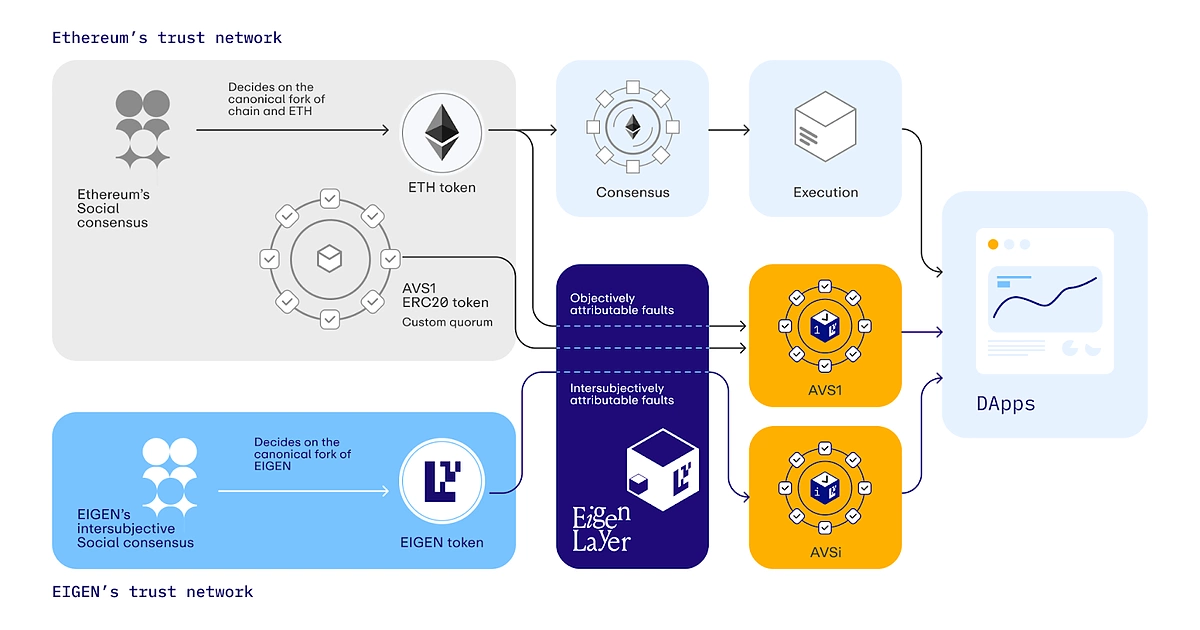
This is where your security is "rented" out. EigenLayer allows you to stake ETH to secure specific applications, known as AVSs. These range from oracle networks to decentralized computing tasks. Research the specific AVS you are supporting; a high-yield AVS may carry higher technical or economic risks than a established infrastructure provider.
Slashing is the penalty for misbehavior or downtime. Understand the specific slashing conditions of the AVS you have chosen. Some AVSs have strict uptime requirements, while others may penalize you for signing invalid messages. Ensure you have a monitoring strategy in place to avoid accidental penalties that could reduce your principal.
| Strategy | Risk Level | Liquidity |
|---|---|---|
| Solo Validator | Low | None |
| LRT Provider | Medium | High |
| Direct AVS Stake | High | Low |
The decision to restake is fundamentally a decision to trust the security assumptions of the Ethereum network and the specific AVS you choose. By following this framework, you can align your participation with your financial goals and risk appetite.
Spotting Weak Options in Restaking
EigenLayer dominates the restaking market with over $15 billion in total value locked, but not every option built on top of it is built to last. As the protocol shifts from pure restaking to verifiable cloud infrastructure, investors need to distinguish between robust infrastructure and speculative wrappers that promise yield without real utility. Many projects mislead users by conflating EigenLayer's native security with the independent security of the actives they secure.
A common mistake is assuming that higher yields automatically signal better performance. In modular security, yield often reflects higher risk or lower liquidity. Look for protocols that transparently share their slashing risks and have clear, audited smart contracts. If a project hides its risk parameters or offers yields significantly above the market average, it is likely masking instability. Always verify that the actives you are interacting with have been formally verified by EigenLayer's core team.
Another weak option is the "set and forget" mindset. Restaking requires active management. Market conditions change, and the value of the underlying ETH fluctuates. Protocols that do not offer tools for rebalancing or risk adjustment are leaving money on the table. Instead, choose platforms that provide real-time data on slashing events and validator performance. This transparency allows you to make informed decisions rather than relying on vague promises of passive income.
Finally, avoid projects that lack clear governance models. Decentralized governance ensures that the protocol can adapt to new threats and opportunities. Without it, a single point of failure can compromise the entire system. Check the community forums and development activity to gauge the health of the project. A vibrant, active community is a strong indicator of long-term viability, while silence often precedes a collapse.
No comments yet. Be the first to share your thoughts!