
Set up your wallet and bridge ETH
Before you can participate in EigenLayer restaking, you need a funded wallet on a supported Layer 2 network. EigenLayer relies on Ethereum’s security, so your funds must move from an exchange or mainnet wallet to an L2 like Arbitrum, Base, or Optimism. This section walks you through preparing your environment.

Download a self-custody wallet like MetaMask or Rabby. These tools allow you to manage private keys and interact directly with blockchain contracts. Ensure you securely store your seed phrase offline; losing it means losing access to your funds permanently.
Buy ETH from a centralized exchange (CEX) like Coinbase or Binance. Transfer this ETH to your wallet’s Ethereum mainnet address first. You will need mainnet ETH to pay for the gas fees associated with bridging to a Layer 2 network.
Use an official bridge or a trusted aggregator like the official Arbitrum Bridge, Base Bridge, or Optimism Gateway to move your ETH from Ethereum mainnet to your chosen L2. EigenLayer supports multiple L2s, so verify which networks are currently active on the EigenLayer documentation before bridging.
Deposit ETH into the EigenLayer contract
Restaking begins with a single, irreversible action: depositing your liquid ETH directly into the EigenLayer smart contract. This deposit locks your assets on Ethereum, activating them as a security layer for other decentralized services. Once deposited, your ETH continues to earn its base staking rewards from Ethereum validators, but it also becomes available to secure additional protocols known as Actively Validated Services (AVS).
This process is not a trade or a swap. You are not exchanging ETH for a new token immediately. Instead, you are providing "shared security" to the broader ecosystem. The EigenLayer protocol acts as a marketplace for trust, allowing developers to tap into your validator's security without building their own independent sets. By depositing here, you are essentially renting out your validator's commitment to other networks.
Before initiating the deposit, ensure you are using the official EigenLayer interface or a trusted, audited integration. The smart contract interaction requires you to approve the transfer of your ETH to the EigenLayer vault. This step is critical because it defines the terms of your participation. Once the transaction is confirmed on-chain, your ETH is committed, and you can proceed to select which AVSs you wish to support.
Navigate to the official EigenLayer portal and connect your Web3 wallet (such as MetaMask or Coinbase Wallet). Verify the URL is correct to avoid phishing sites. The dashboard should display your available ETH balance and current staking status.
Select the amount of liquid ETH you wish to restake. You will need to sign an approval transaction to allow the EigenLayer contract to access your funds. This is a standard ERC-20 approval step, but ensure the contract address matches the official EigenLayer deployment.
Submit the deposit transaction. This action locks your ETH into the EigenLayer vault. You will receive a receipt token representing your share of the staked assets. This step finalizes your entry into the restaking ecosystem, making your ETH available for AVS selection.
Delegate stake to an active operator
Once your ETH is restaked, you must assign it to an operator. An operator is an independent entity that runs the validator nodes and provides the actual computing power to secure EigenLayer contracts. Think of your stake as capital and the operator as the management team; your capital provides the security budget, but the operator does the heavy lifting of signing blocks and maintaining uptime.
The relationship is permissionless: any user can become an operator, and any staker can delegate to any operator. However, not all operators are equal. You are effectively outsourcing your security responsibilities, so choosing a reliable operator is critical. If an operator goes offline or behaves maliciously, your staked ETH is at risk of slashing.
When selecting an operator, look beyond the name and examine their on-chain performance. Key metrics include their commission rate (the fee they take from your rewards), their historical uptime, and the total amount of stake they manage. High commission rates can significantly erode your long-term yields, while poor uptime increases the risk of penalties.
Use the table below to compare top operators based on commission, uptime, and total stake delegated. This side-by-side view helps you identify operators that balance cost with reliability.
| Operator | Commission | Uptime | Total Stake Delegation |
|---|---|---|---|
| EigenCloud | 5% | 99.9% | 120,000 ETH |
| StakeSafe | 3% | 99.8% | 85,000 ETH |
| ValidatorOne | 8% | 99.95% | 200,000 ETH |
| NodeRunner | 2% | 99.5% | 50,000 ETH |
After reviewing the data, connect your wallet to the EigenLayer dashboard or a compatible staking interface. Search for your chosen operator by name or address. Confirm the delegation transaction, noting that there may be a minimum staking period or lock-up duration depending on the specific contract terms. Once the transaction is confirmed, your ETH is actively secured by that operator.
Choose which AVS to support
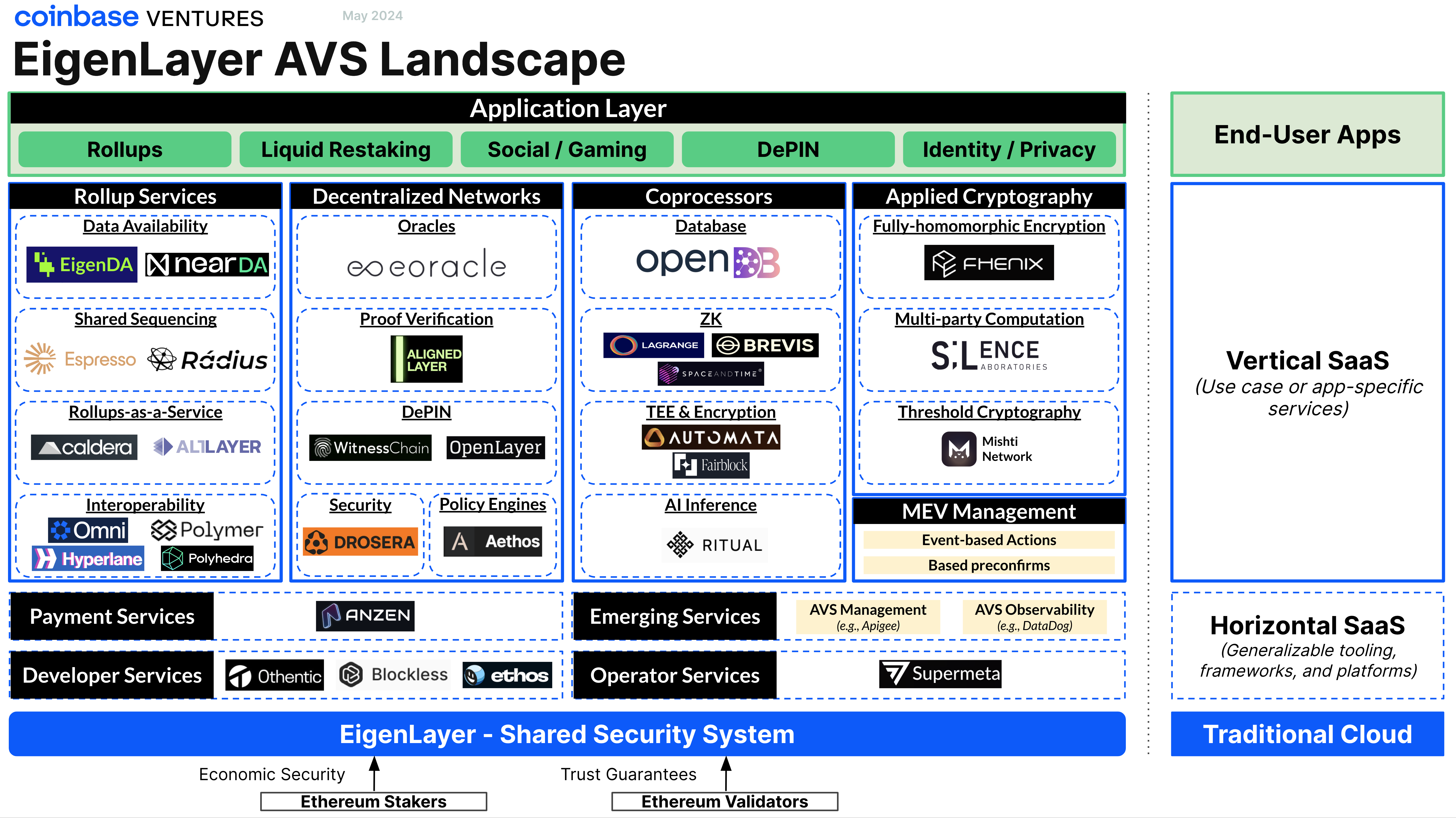
Actively Validated Services (AVS) are independent applications that borrow security from EigenLayer rather than launching their own validator sets. This permissionless model allows builders to tap into an existing network of secure validators, but it also means you are directly funding the security of a specific third-party protocol.
When selecting an AVS, treat it like a vendor contract. You must evaluate the technical maturity of the service and the financial incentives for the operators running it. If the AVS fails or the operators are undercompensated, your restaked ETH is exposed to slashing conditions.
Before delegating, run through this checklist to ensure the AVS aligns with your risk tolerance:
- Operator Transparency: Does the AVS publish clear operator requirements and expected returns?
- Slashing Conditions: Are the slashing conditions clearly defined and limited to specific failures?
- Protocol Maturity: Is the AVS codebase audited and battle-tested, or is it in early beta?
- Economic Incentives: Do the rewards justify the risk of restaking your ETH?
For more details on how EigenLayer functions as a shared security layer, see the EigenLayer Overview.
Monitor rewards and manage risk
Tracking your restaking earnings requires looking beyond the gross yield. EigenLayer distributes rewards from Actively Validated Services (AVS) directly to operators, who then share a portion with restakers. Because these payouts vary by AVS performance and network demand, your actual returns will fluctuate. Check your dashboard regularly to verify that rewards are accruing as expected and that no AVS has paused distributions.
The most significant danger in restaking is slashing. If an operator you have delegated to misbehaves—such as by double-signing or going offline—the protocol can confiscate a portion of your staked ETH. This is not a theoretical risk; it is a core mechanism designed to enforce honesty. When you restake, you are essentially insuring multiple services simultaneously. If one fails, your capital is on the line.
To mitigate this, diversify your delegation. Do not put all your ETH behind a single operator or a single AVS. Spread your stake across several reputable operators with strong track records. Regularly audit your positions to ensure you are comfortable with the specific risks of each service you are supporting. If an AVS becomes too risky or the rewards no longer justify the exposure, you can opt out, though you must wait for an unbonding period to withdraw your assets.
EigenLayer restaking FAQ
What does EigenLayer do?
EigenLayer allows Ethereum validators to "restake" their already-staked ETH to secure additional services, known as Actively Validated Services (AVSs). This process lets developers build new protocols without needing to recruit their own independent validator sets. Instead, they can tap into the existing security of the Ethereum network, promoting permissionless innovation and broader experimentation within the ecosystem [src-7].
Is EigenLayer a good investment?
Investment viability depends on your risk tolerance and market timing. Current technical indicators suggest a bearish sentiment, with an 83% bearish signal and a Fear & Greed Index score of 25, indicating extreme fear [src-3]. The token has experienced 9.66% price volatility over the last 30 days, with 47% green days in that period. As with any high-stakes crypto asset, thorough due diligence is essential before allocating capital [src-serp-3].
Does EigenLayer have a future?
The long-term outlook for EigenLayer hinges on the adoption of its restaking model by other protocols. While price predictions vary, some models suggest gradual growth if the protocol continues to expand its utility. For instance, one projection estimates the price could reach $0.37 by 2041 based on a steady annual growth rate [src-serp-7]. However, these are speculative figures, and the actual future will be defined by real-world usage and network security demands.
Who is the CEO of EigenLayer?
EigenLayer is developed by Eigen Labs, a team led by CEO Nikil Viswanathan. He has been a central figure in the protocol's development and public relations, often representing the project at industry events and in official communications.
No comments yet. Be the first to share your thoughts!