
Eigenlayer restaking yield 2026 limits to account for
The era of unsustainable, double-digit APYs in EigenLayer restaking has ended. In early 2026, the protocol controls 93.9% of the restaking market with over $15 billion in total value locked (TVL). This dominance has shifted the focus from chasing speculative yields to understanding the structural constraints that now define returns.
Current APYs for restakers typically range between 3.8% and 6%. This stabilization reflects a maturation of the ecosystem, where yields are increasingly tied to the actual value of restaked assets rather than token inflation. The "flash crash" era of volatile, artificial incentives has given way to a more predictable, albeit lower, return profile.
Restakers must now evaluate yield through the lens of risk-adjusted returns. The constraint is no longer just about finding the highest APR, but about balancing exposure to slashing risks and smart contract vulnerabilities against the modest gains from restaking. Understanding these limits is essential for long-term participation in the EigenLayer ecosystem.
Eigenlayer restaking yield 2026 choices that change the plan
Restaking has matured from a speculative yield play into a structured income stream, but the margins are no longer infinite. As of early 2026, EigenLayer controls roughly 93.9% of the restaking market with over $15 billion in total value locked (TVL). While the base Ethereum staking yield provides a floor, the additional yield from Active Validation Services (AVSs) is where the real tradeoffs happen.
The current APY for restaked ETH generally ranges between 3.8% and 6%, depending on the specific AVSs you opt into. This extra 1% to 3% in annualized yield is not free money; it is compensation for taking on additional smart contract risk and slashing exposure. Understanding how these yields are calculated and where they come from is essential for managing your portfolio in a post-flash crash environment.
To evaluate whether the extra yield justifies the risk, you need to look at the components of the return. The table below breaks down the typical yield sources and their associated risk profiles.
| Yield Source | Approx. APY | Risk Level | Liquidity |
|---|---|---|---|
| Base ETH Staking | 3.0-4.0% | Low | Locked (Withdrawal Queue) |
| High-Trust AVSs | 0.5-1.5% | Medium | Locked |
| Experimental AVSs | 1.0-3.0% | High | Locked |
| EigenLayer Points | Variable | Speculative | N/A |
The liquidity lock choices that change the plan
The most significant tradeoff in restaking is liquidity. Unlike traditional staking pools that may offer instant unstaking via liquid staking tokens (LSTs), EigenLayer restaking involves a withdrawal delay. This delay is a critical security measure designed to allow time for vulnerability disclosure and slashing events to be resolved before your assets can be moved.
This means your capital is effectively locked for a period that can range from weeks to months, depending on network congestion and the specific withdrawal queue status. If you need immediate access to your ETH, restaking may not be the right vehicle, regardless of the attractive APY.
Slashing and Smart Contract Risk
The "extra" yield you earn from AVSs is directly correlated to the security assumptions of those services. If an AVS you support is compromised or if you are slashed for misbehavior, you lose capital. High-trust AVSs, which often act as oracles or data availability layers, tend to have lower yields but more established security models. Experimental AVSs offer higher potential returns but carry a much higher risk of smart contract exploits or slashing events.
Evaluating the Net Return
When calculating your net return, do not just look at the headline APY. Factor in the potential cost of slashing, the opportunity cost of locked capital, and the tax implications of restaking rewards. In 2026, the market has stabilized, and yields are more predictable than in the early days. However, the risk of a "flash crash" in AVS token prices or a major exploit remains a real concern.
The key is to diversify across multiple AVSs with different security models. This reduces your exposure to any single point of failure while still capturing the aggregate yield from the restaking ecosystem. Always verify the current withdrawal queue status and the specific slashing conditions of any AVS before committing your restaked ETH.
How to choose the next restaking step
EigenLayer now controls 93.9% of the restaking market, with over $15 billion in TVL. This dominance has stabilized yields, but it also concentrates risk. Choosing your next move requires a disciplined framework that balances yield capture against potential slashing events.
Use this ordered sequence to evaluate your position. Each step builds on the previous one to ensure you are not overexposed to a single failure point.

Before adding restaking, audit your base Ethereum stake. If you are already heavily weighted in ETH, restaking increases your correlation to Ethereum’s technical risk. Aim to keep your total ETH exposure within your broader portfolio’s risk tolerance. Do not restake more than you can afford to see drop in value during a market correction.
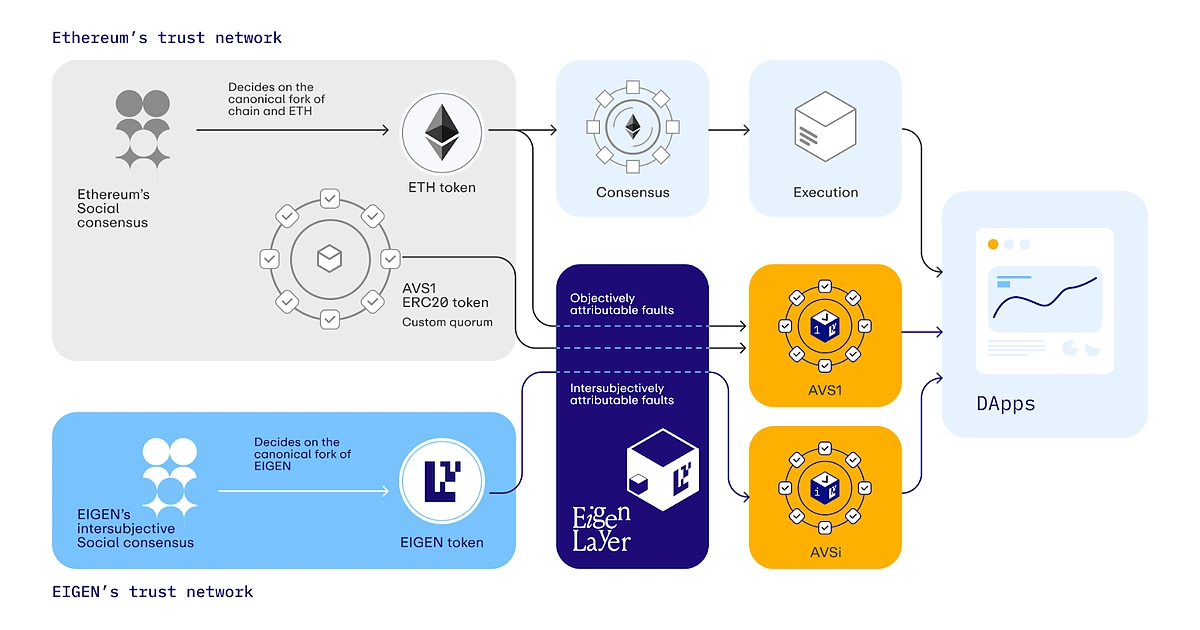
Not all Operators are equal. Look for those with high uptime, transparent slashing history, and diversified AVS (Actively Validated Services) integrations. Avoid Operators that promise abnormally high yields by stacking too many high-risk AVSs. A conservative Operator prioritizes security over maximum yield.
Restaking allows you to secure multiple services simultaneously. Spread your stake across different AVS categories, such as data availability, oracle networks, and sequencers. This diversification ensures that a failure in one service does not trigger a full slashing event across your entire restaked position.

Slashing is the primary risk in restaking. Understand the specific conditions that trigger penalties for your chosen Operator and AVSs. Set up alerts for any changes in the protocol’s governance or operator performance. Regular monitoring allows you to withdraw your stake before a potential crisis escalates.
Current APYs range from 3.8% to 6%, but these rates fluctuate with demand. Periodically review your yield-to-risk ratio. If yields drop significantly or risk increases, consider reallocating to more stable staking options. Do not chase high yields if the underlying security assumptions have weakened.
Watchouts: Spotting Weak Restaking Options
EigenLayer controls 93.9% of the restaking market with $15.258 billion in TVL, but high market share doesn't guarantee safety for every participant. Many new users chase APYs ranging from 3.8% to 6% without understanding the underlying risk layers. The post-flash crash era has stabilized yields, but it also exposed common mistakes in how restakers allocate capital.
1. Ignoring Slashing Risk
The biggest mistake is treating restaking like a passive savings account. When you restake ETH, you are signing up for potential slashing penalties if the underlying Actively Validated Services (AVS) fail. This isn't a minor fee; it can result in the loss of your staked principal. Always check the historical slashing events for any AVS you plan to support. If the protocol hasn't been battle-tested, the yield is often a trap for uninformed capital.
2. Overlooking Liquidity Lockups
Many weak options promise high yields but lock your ETH for extended periods. Unlike liquid staking tokens (LSTs) that you can sell instantly, restaked assets may be illiquid during withdrawal queues. During market downturns, this illiquidity can force you to sell at a loss or miss other opportunities. Verify the withdrawal period before committing. If the protocol doesn't clearly state the queue time, it's a red flag.
3. Chasing Unsustainable APYs
High APYs often come from unsustainable token emissions rather than real economic yield. Once emissions taper off, the yield can collapse. Look for protocols with revenue from actual service usage, not just token inflation. If an AVS claims 20% APY with no clear revenue model, it's likely a weak option designed to attract temporary liquidity. Stick to protocols with transparent, sustainable yield sources.
4. Neglecting Smart Contract Risk
Restaking involves multiple smart contract layers: the Ethereum consensus layer, EigenLayer contracts, and the AVS contracts. Each layer adds potential points of failure. Audit reports are essential, but they aren't enough. Look for bug bounties and insurance coverage. If a protocol lacks both, you're exposed to significant technical risk. Always diversify across multiple AVSs to mitigate single-point failures.
5. Failing to Monitor Position Health
Restaking isn't set-and-forget. You need to monitor your position for changes in slashing conditions, protocol upgrades, and market conditions. Some protocols automatically rebalance, while others require manual intervention. If you don't have the time to monitor, consider a simpler staking solution. Active management is required to protect your yield in a volatile market.
Eigenlayer restaking yield 2026: what to check next
Restaking has moved from experimental to essential for many ETH holders, but the mechanics carry specific risks that differ from standard staking. Here are the practical answers to the most common questions about EigenLayer, yields, and the protocol's role in Ethereum's infrastructure.
What is EigenLayer restaking?
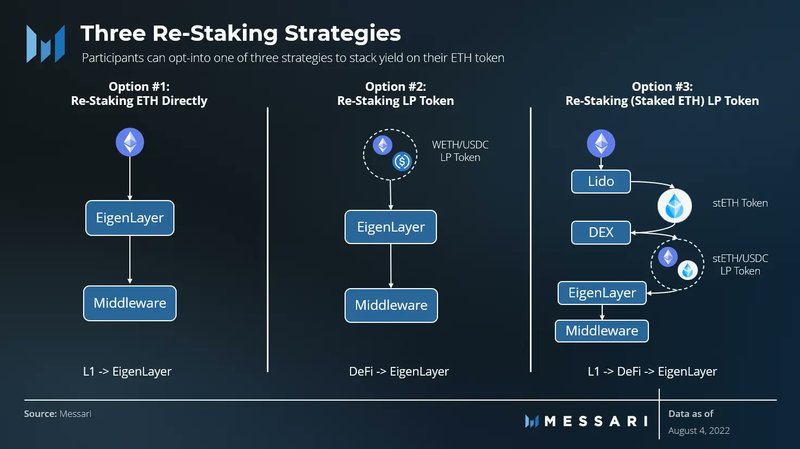
Restaking allows you to use already-staked ETH to secure additional networks called Actively Validated Services (AVSs). Instead of locking your ETH once for Ethereum consensus, you delegate it again to support new protocols like data availability layers or oracles. This dual-use generates extra yield on top of your base staking rewards, but it also exposes your stake to the security risks of those new services.
What are the risks of EigenLayer?
The primary risk is slashing. If an AVS you support fails to perform its duties, your ETH can be penalized or lost. This is distinct from standard staking penalties, which only apply to Ethereum consensus errors. Additionally, there is smart contract risk in the EigenLayer codebase and liquidity risk during the withdrawal period. If you need immediate access to your funds, the 7-day withdrawal delay for native restaking can be a significant constraint during market downturns.
What is the APR for Ethereum staking?
Base Ethereum staking yields currently range between 3.8% and 6% APR, depending on the total amount of ETH staked and network activity. EigenLayer restaking adds a variable layer of yield on top of this base rate. The additional return depends on which AVSs you opt into and their current demand, potentially adding 1% to 3% more annualized yield. Total returns are not fixed and fluctuate with network conditions and AVS performance.
When did ETH go proof of stake?
Ethereum transitioned from proof-of-work to proof-of-stake on September 15, 2022, during "The Merge." This fundamental shift reduced energy consumption by over 99% and introduced the staking mechanism that EigenLayer later built upon. Understanding this timeline helps clarify that restaking is a secondary layer on an existing proof-of-stake foundation, not a replacement for the base consensus mechanism.
No comments yet. Be the first to share your thoughts!