
EigenLayer in 2026: Constraints and Reality
EigenLayer has evolved from a novel restaking experiment into a critical infrastructure layer for Ethereum. By allowing staked ETH to secure additional services, it creates a "marketplace for trust" that reduces the need for every new project to bootstrap its own validator set. This efficiency is what drives the current wave of institutional interest, but it also introduces complex dependencies that define the 2026 landscape.
The primary constraint today is not technical capability, but economic alignment. As more validators opt into Active Verification Services (AVSs), the concentration of staked ETH securing multiple protocols increases systemic risk. If one AVS fails or is compromised, the shared security model means the entire restaking ecosystem faces potential penalties. This interdependence requires rigorous monitoring and a deeper understanding of slashing conditions than traditional staking ever demanded.
Institutional adoption hinges on solving this risk transparency. Major financial entities are not just looking for yield; they need clear, auditable proof that their staked assets are not over-leveraged across untested AVSs. The protocol’s ability to provide granular visibility into these exposures will determine whether restaking remains a niche utility or becomes a standard component of institutional crypto portfolios. Without this clarity, the promise of shared security remains a liability rather than an asset.
EigenLayer Tradeoffs for 2026
As the dominant restaking protocol on Ethereum, EigenLayer holds roughly 94% of the market and over $15 billion in total value locked. However, the landscape is shifting rapidly. While the protocol offers a "marketplace for trust" for builders, users must weigh significant risks against potential yields. The primary tension lies between securing multiple Actively Validated Services (AVSs) and maintaining the security of the base Ethereum layer.
Security vs. Complexity
Restaking allows you to secure multiple networks simultaneously, but this introduces complexity. If one AVS fails or is compromised, your restaked assets are at risk. This is not just a theoretical concern; as the protocol evolves into a "verifiable cloud," the attack surface grows. Users must evaluate their tolerance for smart contract risk across multiple layers.
Liquidity and Exit Risks
Liquidity is a major factor. Documentation indicates that less than 1% of assets remain restaked with EigenLayer, down from about half in early 2026, with plans to reach zero by Q3. This suggests a potential migration away from traditional restaking or a shift in how value is locked. Users should consider the ease of exit and the potential for slippage during market stress.
Token Volatility
The EIGEN token price can be volatile, affecting the real value of rewards. While yields may appear high in token terms, fiat-denominated returns can fluctuate significantly. Investors should monitor the token's performance relative to ETH and other major assets.
| Factor | Benefit | Risk | Mitigation |
|---|---|---|---|
| Security | Multi-chain security | Shared slashing conditions | Limit AVS participation |
| Liquidity | High TVL | Exit congestion | Monitor on-chain data |
| Yield | Higher APY | Token volatility | Hedge with ETH |
| Complexity | Builder access | Smart contract bugs | Audit review |
How to choose the right EigenLayer strategy
Restaking on EigenLayer is not a single product; it is a marketplace for trust. In 2026, the gap between passive yield and active security has widened. Your choice of strategy depends on your risk tolerance, technical comfort, and the specific Active Validation Services (AVS) you want to support.
Follow this framework to select the path that fits your portfolio.

Restaking introduces slashing risk. If an AVS validator behaves maliciously, your staked ETH could be penalized. Start by deciding how much capital you are willing to expose to potential slashing events. Conservative investors should stick to highly audited, high-market-cap AVSs, while aggressive allocators might target early-stage infrastructure.
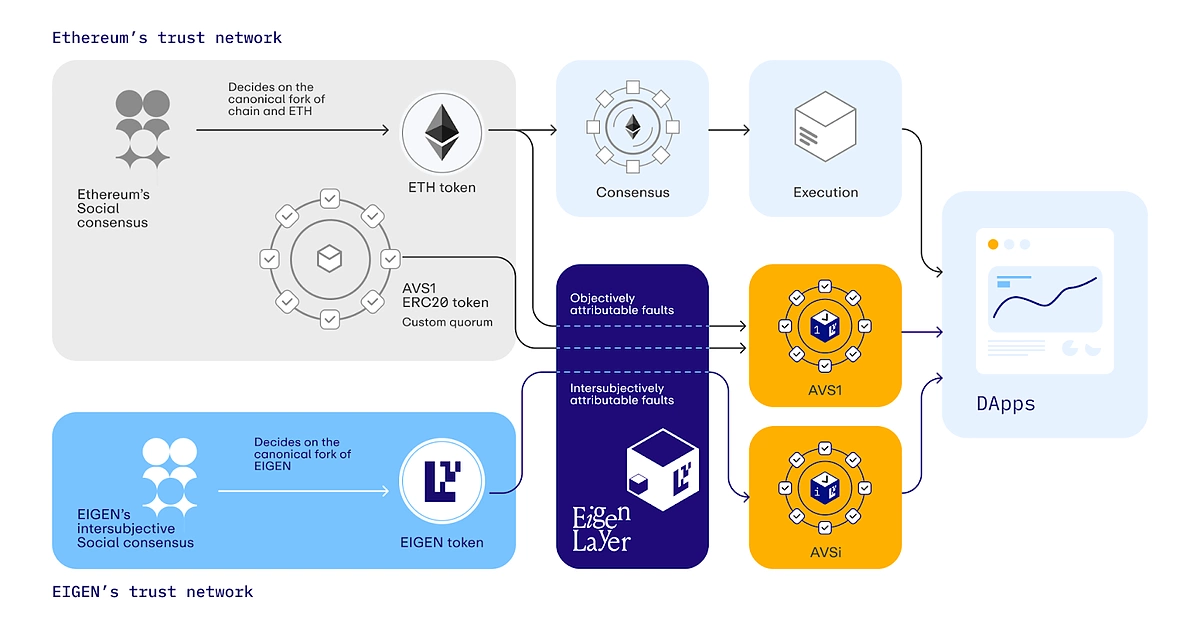
You can restake native ETH or Liquid Staking Tokens (LSTs) like stETH or rETH. LSTs offer flexibility, allowing you to trade or hedge your position while earning restaking yields. Native ETH restaking often provides higher base yields but locks your capital completely until you withdraw and unstake.
Not all AVSs are equal. Look for services with clear utility, such as EigenDA for data availability or decentralized oracle networks. Evaluate the AVS’s economic security model and historical performance. Supporting established AVSs reduces the risk of protocol failure, while early adoption of new AVSs may offer higher incentives but greater uncertainty.

You have three main routes: run your own validator node, delegate to a professional restaking operator, or use a non-custodial staking platform. Running your own node requires technical expertise and significant hardware. Delegating to operators is easier but introduces counterparty risk. Non-custodial platforms offer a middle ground with automated management.

Restaking yields and slashing risks change rapidly. Set up alerts for operator performance and AVS health. Regularly review your allocations to ensure they still match your risk profile. Rebalance your portfolio as new AVSs launch or as existing ones mature and stabilize.
| Method | Risk Level | Effort |
|---|---|---|
| Native ETH Restaking | Low | High |
| LST Restaking | Medium | Medium |
| Operator Delegation | Medium-High | Low |
Spotting Weak Restaking Options
Not every restaking setup delivers the promised yield, and some Active Verification Services (AVS) carry hidden risks. Institutional adoption is growing, but so are the pitfalls. Before committing capital, you need to filter out misleading claims and weak infrastructure.
1. Check the Slashing Conditions
Slashing is the primary risk in restaking. If an AVS operator misbehaves, your staked ETH can be penalized. Weak options often have vague or poorly audited slashing conditions. Look for clear, on-chain enforcement mechanisms. If the documentation is sparse or the audit is outdated, treat it as a red flag. Your capital is only as safe as the strictest penalty.
2. Evaluate the AVS Utility
Many AVSs promise utility but deliver little. Ask: does this service actually secure something valuable? Avoid projects that restake for the sake of restaking. Strong AVSs provide tangible value, like data availability (EigenDA) or oracle services. If the use case is abstract or speculative, the yield is likely unsustainable. Focus on services with real demand and clear economic incentives.
3. Assess Operator Decentralization
Centralized operators pose a systemic risk. If a few large entities control most of the restaked capital, they can collude or fail. Look for a diverse set of operators with independent infrastructure. Weak options often rely on a single provider or a tight-knit group. Decentralization isn't just a buzzword; it's your insurance against single points of failure.
4. Review the Tokenomics
Some protocols inflate the supply to reward early restakers, creating sell pressure. Check the emission schedule and vesting terms. If the token price is heavily dependent on continuous new deposits, the model is fragile. Sustainable yield comes from real service fees, not token emissions. Avoid options where the token price is the only metric of success.
Eigenlayer 2026: what to check next
What is EigenLayer today? EigenLayer started as an Ethereum restaking protocol but rebranded to EigenCloud in June 2025. It now operates as a "verifiable cloud" marketplace. It allows staked ETH and liquid staking tokens to secure additional services beyond Ethereum itself.
Is restaking still growing? The protocol dominated the market in early 2026 with over $15 billion in total value locked. However, documentation shows less than 1% of assets remain active. The team plans to reach zero restaked assets by Q3 2026 as it shifts focus.
How do I check the price? EIGEN trades on major exchanges. As of January 2026, the price is approximately $0.22, down from $0.47 at the start of the year. The market cap sits around $196 million. Use live charts to track real-time trends.
Is it safe to use? Restaking introduces unique risks. Your ETH secures multiple services, so a failure in any Active Verification Service (AVS) can trigger slashing. Always review the specific AVS security model before committing assets.
No comments yet. Be the first to share your thoughts!