
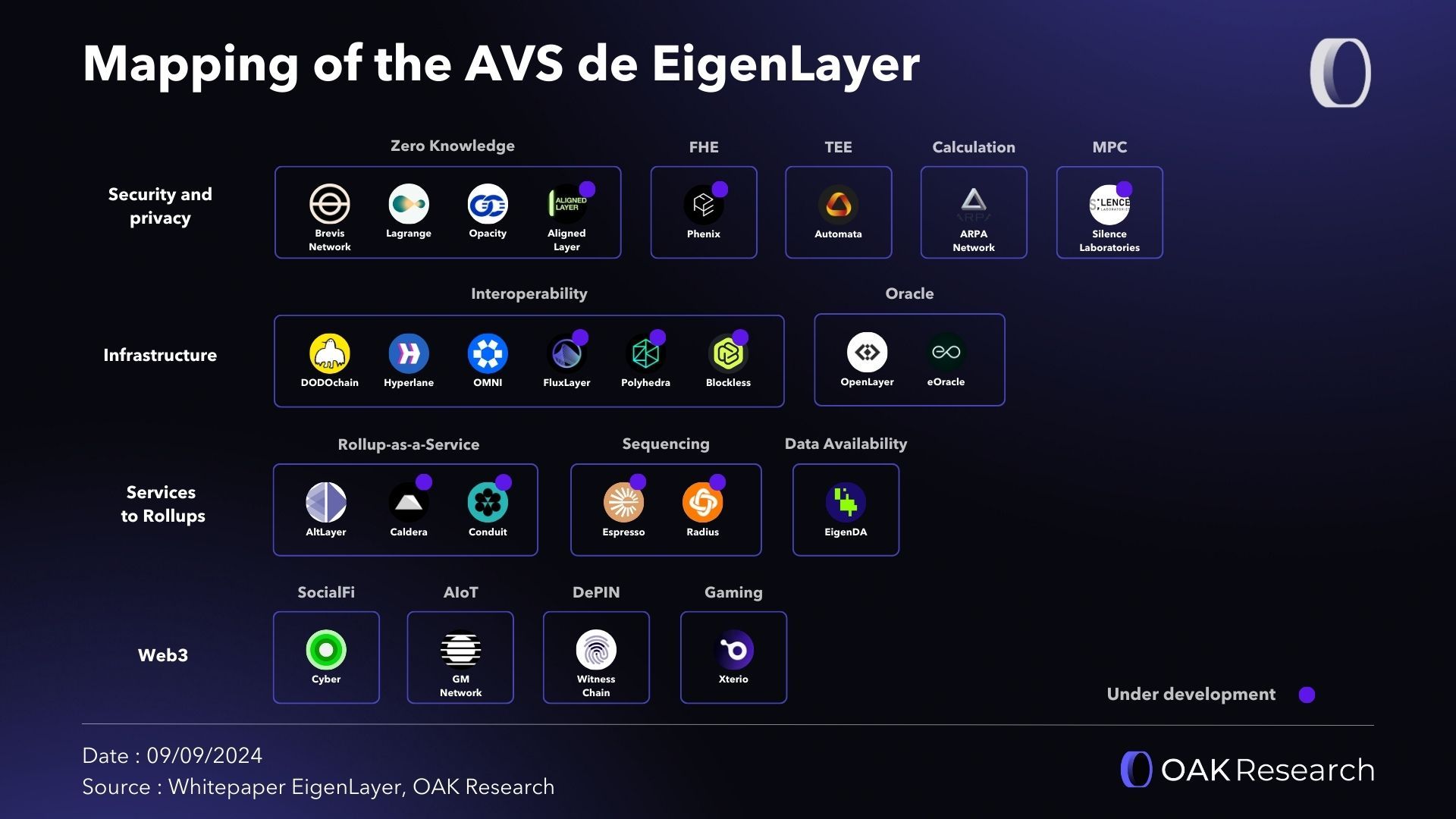
What Makes an EigenLayer AVS Valuable
An Actively Validated Service (AVS) is a decentralized application built on top of EigenLayer that leverages Ethereum’s existing security infrastructure rather than building its own from scratch. Think of an AVS as a specialized utility that plugs into a shared security grid. Instead of launching a new blockchain and spending months recruiting validators to secure it, a developer deploys an AVS that taps into the thousands of ETH already staked by restakers.
This architecture creates a direct value exchange. For the AVS operator, the primary benefit is speed to market and reduced operational overhead. They can focus entirely on building their specific service—whether that is a data availability layer, a shared sequencer, or a complex oracle network—without worrying about the foundational mechanics of consensus and finality. The heavy lifting of security is handled by the Ethereum base layer.
For the restaker, the value proposition is yield generation from a previously idle asset. By delegating their staked ETH to an AVS, they earn additional rewards that complement their base Ethereum staking APY. However, this extra yield comes with a distinct risk profile. Restakers must understand the specific slashing conditions of the AVS they choose to support. If the AVS operator fails to perform its duties correctly, the restaker’s principal can be penalized. Therefore, the value of an AVS is not just its potential yield, but the reliability and clarity of its security model.
The ecosystem is diverse, ranging from simple data availability providers to complex coprocessors that handle heavy computational loads. The most valuable AVSs are those that solve a clear problem for AVS consumers—end users or applications that need the service—while maintaining a transparent and manageable risk framework for the restakers who back them.
Top trending AVS categories in 2026
The EigenLayer ecosystem has matured from experimental prototypes into specialized infrastructure layers. Rather than building monolithic chains, developers now deploy Actively Validated Services (AVS) that solve specific bottlenecks in the Ethereum stack. Understanding these categories helps stakers allocate restaked capital to services with proven utility and clear risk profiles.
The current landscape clusters around four primary use cases. Data Availability (DA) layers, such as Celestia or EigenDA, prioritize throughput by offloading blob storage from Ethereum mainnet. Oracle networks like Pyth or RedStone focus on real-time price feed accuracy, serving DeFi protocols that require low-latency data. Coprocessors, including Renzo or Manta, handle heavy computation tasks like zero-knowledge proof verification, freeing up validator resources for consensus. Finally, shared sequencers and bridge validators provide the connective tissue for cross-chain interoperability.
| Category | Security Model | Yield Potential | Risk Profile |
|---|---|---|---|
| Data Availability | Shared Ethereum Security | Medium | Low |
| Oracles | Shared Ethereum Security | High | Medium |
| Coprocessors | Shared Ethereum Security | High | High |
| Shared Sequencers | Shared Ethereum Security | Medium | Medium |
Each category offers distinct ROI mechanics. Data availability services typically generate steady, predictable yields from L2 rollup fees, making them suitable for conservative restakers. Oracle networks and coprocessors often command higher premiums due to the computational complexity and reliability requirements of their tasks, but they carry higher slashing risks if the underlying service fails to perform correctly. As the ecosystem expands in 2026, the most profitable strategies will likely involve diversifying across these categories to balance yield against specific technical risks.
How restakers earn yield from AVSs
Restaking creates a dual-income stream for Ethereum stakers by allowing them to lease their already-staked ETH security to new decentralized services, known as Actively Validated Services (AVSs). When you restake, your ETH continues to earn the base Ethereum Proof-of-Stake yield, but you can now generate additional returns by providing computational power or verification to these specific networks. This mechanism effectively turns your staked capital into a multi-purpose asset rather than a single-use security deposit.
The economic engine behind this is a direct trade-off between risk and reward. AVSs, such as the Ava Protocol automation network or decentralized oracle systems, require robust security to function but often lack the capital to bootstrap their own validator sets. By tapping into EigenLayer’s shared security, they pay restakers for their validation work. In return, restakers receive "slashing" penalties if they act maliciously on the AVS, alongside the new yield generated by the service. This creates a market where security is priced dynamically based on demand.
To understand the potential upside, consider the difference between passive and active staking. A standard ETH staker earns roughly 3-4% APR from Ethereum block rewards. A restaker, however, layers AVS-specific rewards on top of this base. While exact yields fluctuate based on network congestion and AVS adoption, active participation can significantly boost total returns. The key is that the AVS pays for the security it consumes, distributing those fees to the restakers who backed it.
This model benefits both sides of the equation. AVSs can focus entirely on building their product without the distraction of managing their own security infrastructure, while restakers use the full economic potential of their staked assets. As the ecosystem matures, we expect to see more diverse AVS categories, from data availability layers to shared sequencers, each offering unique yield opportunities for those willing to provide their validation power.
Key risks in the AVS ecosystem
Use this section to make the EigenLayer AVS Ecosystem decision easier to compare in real life, not just on paper. Start with the reader's actual constraint, then separate must-have requirements from details that are merely nice to have. A practical choice should survive normal use, maintenance, timing, and budget. If a recommendation only works in an ideal situation, call that out plainly and give the reader a fallback path.
The simplest way to use this section is to write down the must-have criteria first, then compare each option against those criteria before weighing nice-to-have features.
Tools to track AVS performance
Monitoring an EigenLayer position requires more than watching a single dashboard. You need visibility into both the health of the specific AVS you are supporting and the broader state of your restaked capital. The ecosystem has matured from a single protocol view to a multi-tool landscape where data is fragmented across several specialized interfaces.
For a comprehensive view of the entire EigenLayer ecosystem, Validator Info offers a detailed directory of all active AVSs. It serves as a reliable starting point for checking which services are currently accepting security and how they are categorized. This resource helps you verify that the AVS you are supporting is active and properly indexed within the network.
On the individual asset side, EigenPhi provides deep analytics on restaking flows, validator distribution, and AVS-specific metrics. This tool is essential for understanding where security is concentrating and identifying potential bottlenecks in specific services. It transforms raw on-chain data into actionable insights about which AVSs are gaining traction and which are showing signs of strain.
Security remains the primary concern when tracking performance. A drop in AVS uptime or a spike in slashing events can impact your rewards instantly. Tools like EigenLayer’s official dashboard and community-run alert systems provide real-time notifications. These alerts allow you to react quickly to changes in the network, ensuring you are not holding a position in a failing service.


As an Amazon Associate, we may earn from qualifying purchases.
Frequently asked questions about EigenLayer AVS
What is AVS in EigenLayer?
An Autonomous Verifiable Service (AVS) is a decentralized application built on Ethereum that leverages EigenLayer’s restaking infrastructure. Instead of building its own validator network from scratch, an AVS uses the shared security of Ethereum stakers to verify off-chain operations. This architecture allows developers to launch services with enhanced decentralization and security while maintaining cost efficiency.
Who are AVS consumers in EigenLayer?
AVS consumers are the end users or applications that rely on the services provided by an AVS. These services can take many forms, including data availability layers, shared sequencers, oracle networks, bridges, and coprocessors. The consumer interacts with the AVS to access verified data or computational results, while the AVS handles the complex verification process in the background.
What is the main benefit for a new protocol to use restaking?
The primary advantage for a new AVS is the ability to trade security for speed and focus. By using restaking, an AVS does not need to spend resources building and marketing its own validator set. Instead, it can access Ethereum’s existing security pool, allowing the team to pour all resources into building and marketing their core service rather than managing decentralization infrastructure.
How do AVSs ensure integrity and accuracy?
AVSs operate as systems where transactions and services are continuously monitored and verified by a network of validators. These validators, who have staked ETH via EigenLayer, ensure the integrity and accuracy of the AVS’s outputs. If a validator acts maliciously, their staked assets are subject to slashing, creating a strong economic incentive for honest behavior and secure verification.
What types of services can be built as AVSs?
The flexibility of EigenLayer allows for a wide variety of AVS implementations. Common examples include applied cryptography systems, oracle networks that provide real-world data to smart contracts, and bridge protocols that secure cross-chain asset transfers. This versatility makes AVSs a foundational component for next-generation Ethereum infrastructure.
No comments yet. Be the first to share your thoughts!