
Restaking shifts from hype to infrastructure
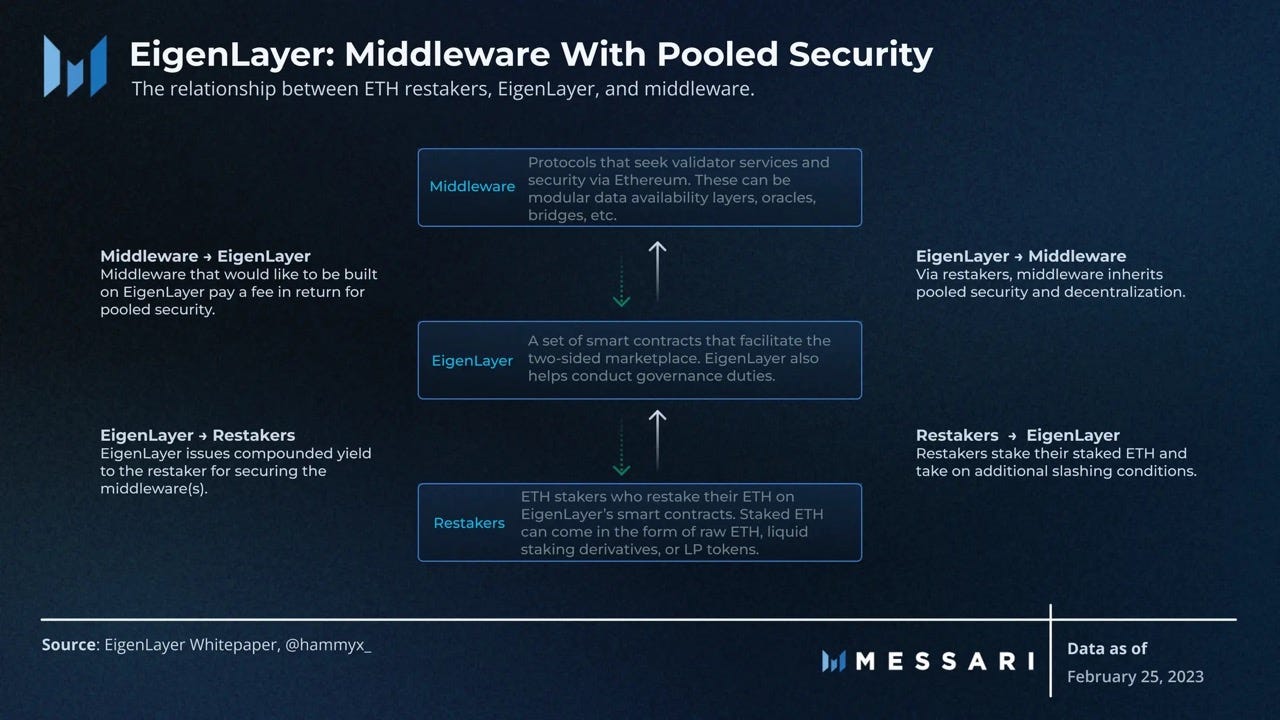
The narrative around EigenLayer AVS 2026 has matured. What began as speculative excitement in 2025 has settled into the quiet, steady hum of critical Ethereum infrastructure. Restaking is no longer just a novel mechanism for earning yield; it is the security backbone for a growing ecosystem of decentralized services.
The numbers reflect this stabilization. EigenLayer TVL has held stably above $15 billion, a figure that signals institutional confidence and long-term commitment rather than fleeting retail speculation. This capital depth provides the economic security necessary for Autonomous Verifiable Services (AVS) to operate reliably, reducing the risk of catastrophic failures that plagued earlier iterations of crypto infrastructure.
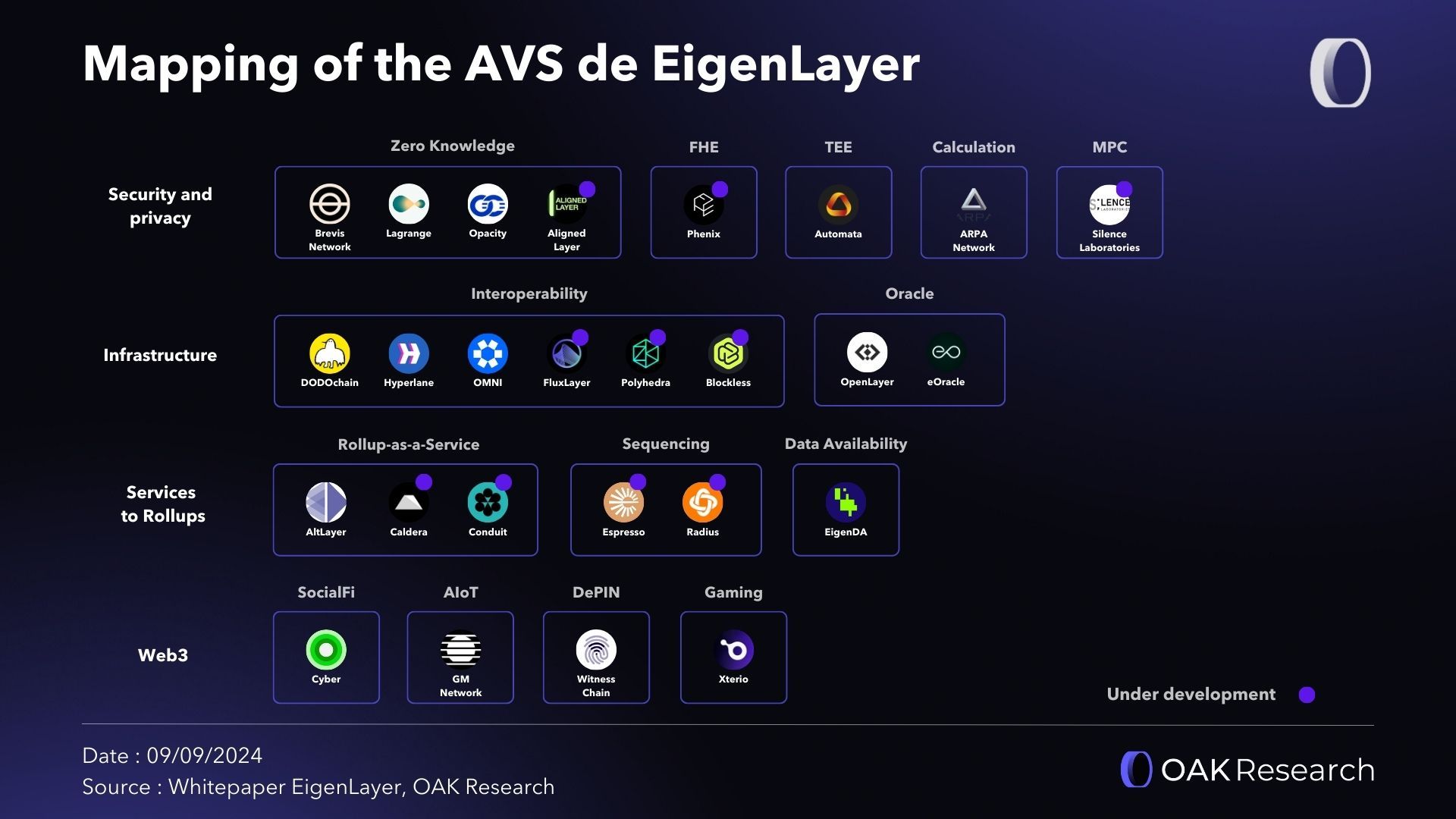
We are now seeing a shift from abstract concepts to concrete utility. AVS providers are building real-world applications—data availability layers, shared sequencers, and oracle networks—that depend on this restaked security. The focus has moved from "what can restaking do?" to "which AVSs are delivering value?" This transition marks the beginning of a more mature phase for the EigenLayer ecosystem, where performance and reliability outweigh hype.
Six new AVS mainnet launches define the year
The EigenLayer AVS 2026 landscape shifted significantly with the mainnet rollout of six actively validated services. These launches move beyond theoretical testing, introducing concrete infrastructure for restaked rollups and Ethereum-native oracles. This expansion marks a maturation phase for the network, where shared security is applied to high-value, complex operations.
The following table compares the six new AVS by category and primary function, illustrating the breadth of services now anchored by EigenLayer's consensus layer.
| Service | Category | Primary Function |
|---|---|---|
| Avail | Data Availability | Provides scalable data availability for rollups |
| Succinct | Validity Proofs | Generates zero-knowledge proofs for verification |
| Nubit | Data Availability | Light-client data availability network |
| Puffer | Restaked Rollups | Enables restaked execution layers |
| EigenDA | Data Availability | High-throughput data availability layer |
| Risc0 | Validity Proofs | RISC-V zero-knowledge virtual machine |
Restaked rollups represent a significant architectural shift, allowing new execution layers to leverage existing validator sets rather than bootstrapping their own security. This reduces the capital requirements for launching new chains while maintaining robust security guarantees. Simultaneously, the integration of Ethereum-native oracles ensures that off-chain data feeds are verified by the same consensus mechanisms securing the base layer, reducing reliance on centralized intermediaries.
These services collectively address the "trilemma" of scalability, security, and decentralization. By offloading specific verification tasks to specialized AVS, the main Ethereum chain remains lean while the ecosystem expands. The result is a more modular blockchain environment where components can be upgraded or replaced without compromising the entire network.
How AVS consumers interact with restaked security
In the EigenLayer AVS 2026 ecosystem, the relationship between developers and end users shifts from passive trust to active verification. An AVS consumer is any end user or application that consumes the services provided by EigenLayer. These consumers rely on Autonomous Verifiable Services to perform custom verification mechanisms for off-chain operations, ensuring that decentralized applications remain secure without sacrificing performance.
Think of an AVS consumer as a client hiring a specialized auditor. Instead of trusting a single centralized entity to validate data or transactions, the consumer connects to an AVS that leverages restaked ETH to provide cryptographic proof of correctness. This model allows for complex services—such as data availability layers, shared sequencers, and oracle networks—to operate with a level of security previously reserved for the Ethereum base layer.
For the end user, this interaction is largely seamless but fundamentally more robust. When you use a dApp secured by an AVS, you are benefiting from a shared security model where your activity is verified by a network of restakers. This reduces the attack surface for specific services while allowing developers to build niche, high-throughput applications that would be too costly to secure independently on Ethereum mainnet.
Top EigenLayer AVS projects to watch in 2026
The EigenLayer AVS 2026 landscape is defined by specific, high-utility applications rather than abstract infrastructure. As the protocol matures, the most significant growth comes from projects that solve distinct problems: shared security for rollups, decentralized oracles, and AI compute verification. These are not experimental concepts; they are active services securing real assets on mainnet.
Restaked Rollups and Shared Sequencers
Rollups benefit most from EigenLayer’s restaking model by outsourcing the complex task of consensus and data availability to a shared security layer. Instead of launching their own validator sets, new rollups can tap into Ethereum’s existing stake. This approach, often called "restaked rollups," reduces the barrier to entry for new chains while maintaining Ethereum-level security guarantees. Projects in this space focus on efficient sequencing and data availability, ensuring that transactions remain fast and cheap without compromising on decentralization.
Ethereum-Native Oracle Networks
Oracles remain the backbone of decentralized finance, and EigenLayer is introducing native oracle networks to replace centralized data feeds. These AVSs validate off-chain data—such as price feeds and random number generation—using restaked ETH. By anchoring oracle security to Ethereum’s stake, these projects eliminate the single points of failure that have plagued traditional oracle systems. This shift allows DeFi applications to operate with greater transparency and resilience against manipulation.
AI and Coprocessor AVSs
The integration of artificial intelligence with blockchain verification is a primary driver of new AVS adoption. Coprocessors handle complex computations off-chain while EigenLayer validators verify the results on-chain. This model is particularly relevant for AI agents that require trustless execution environments. By restaking ETH to secure these computations, the network ensures that AI-driven services remain accountable and verifiable, creating a bridge between traditional compute power and decentralized trust.
Essential Tools for Restaking
Participating in the EigenLayer AVS 2026 ecosystem requires secure management of private keys and staked assets. Hardware wallets provide the necessary cold storage for ETH and restaking positions, protecting users from online threats. Additionally, understanding the technical nuances of AVS development and security models is critical for long-term success. The following resources offer practical guidance and secure hardware options for engaging with the network.


As an Amazon Associate, we may earn from qualifying purchases.
Risks and considerations for restakers
Restaking on EigenLayer AVS 2026 amplifies both yield potential and exposure. By locking capital to secure multiple services simultaneously, you create a complex web of dependencies where a failure in one protocol can trigger cascading consequences across your entire portfolio.
The primary threat is slashing. If an AVS operator misbehaves or fails to perform its duties, the consensus layer can penalize the staker. This isn't just a loss of rewards; it can result in the direct loss of your staked principal. Because EigenLayer is a relatively new infrastructure layer, the exact parameters for slashing conditions can vary significantly between different AVS implementations.
Beyond technical risks, the complexity of managing multiple restaked positions requires diligent study. Unlike simple staking, where you delegate to a single validator, restaking demands active monitoring of the health and performance of every service you support. Ignorance of these nuances is a costly mistake in a high-stakes environment.
Frequently asked questions about EigenLayer AVS
What is an AVS in EigenLayer?
An Autonomous Verifiable Service (AVS) on EigenLayer is a decentralized service built on Ethereum that provides custom verification mechanisms for off-chain operations. Instead of building separate validator sets, projects leverage the existing Ethereum staking infrastructure to secure their specific needs. This allows for shared security across the network, reducing the barrier to entry for new protocols while maintaining high security standards. Learn more about AVS concepts.
Who are AVS consumers in EigenLayer?
AVS consumers are the end users or applications that utilize the services provided by these decentralized networks. The services themselves can take many forms, including data availability layers, shared sequencers, oracle networks, bridges, coprocessors, and applied cryptography systems. The consumer role is distinct from the restaker; while restakers provide the security capital, consumers are the entities relying on the AVS to execute their specific blockchain operations efficiently.
Will Ethereum reach $5,000 in 2026?
Market sentiment suggests potential growth, with some analysts arguing that Ethereum could climb to a new all-time high above $5,000 in 2026. This projection relies on the belief that recent technological upgrades and long-term institutional adoption remain undervalued at current prices. However, crypto markets are volatile, and such forecasts should be treated as speculative rather than guaranteed outcomes. See price analysis.
No comments yet. Be the first to share your thoughts!