
How AVS Revenue Moves Through the System
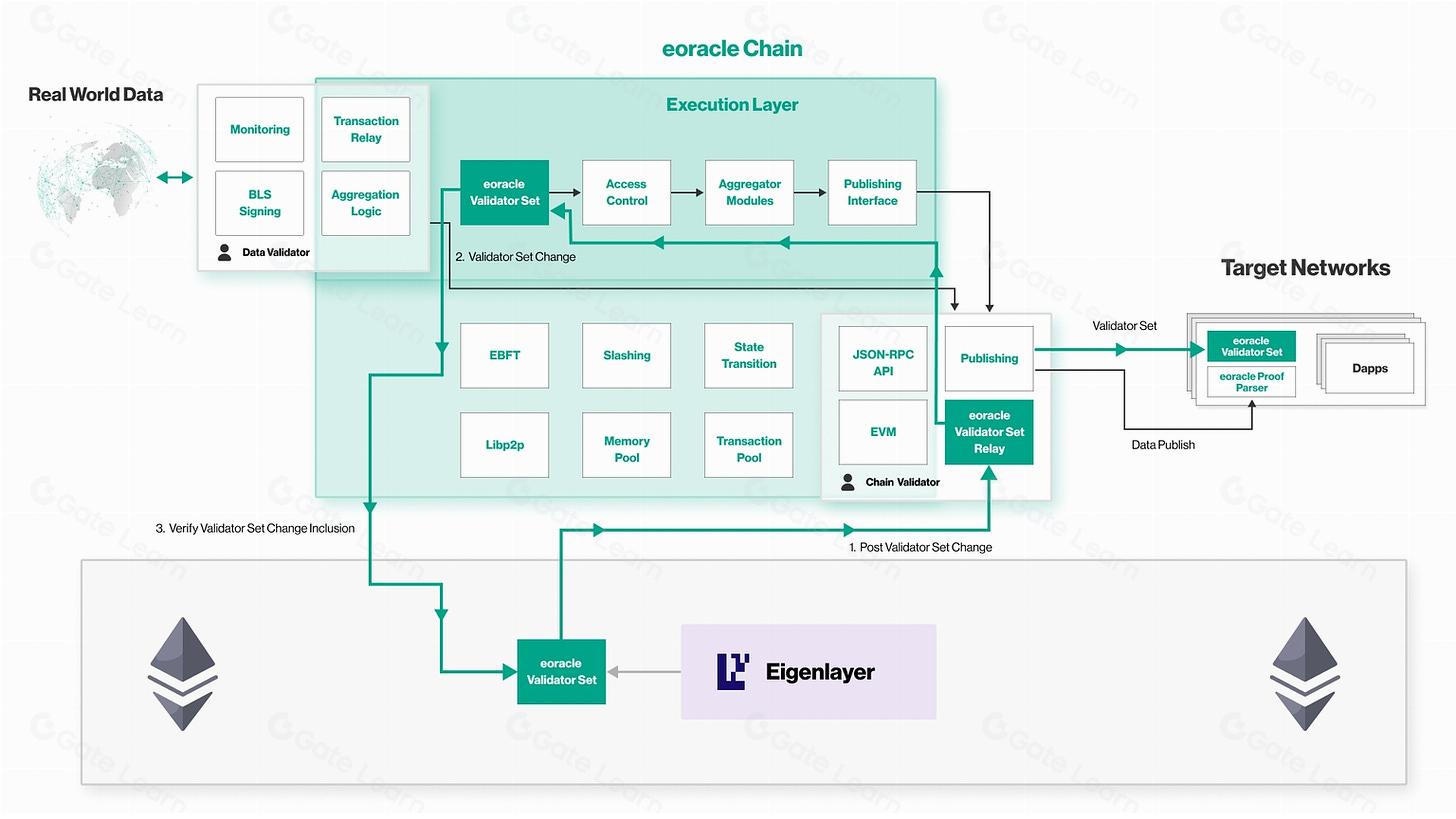
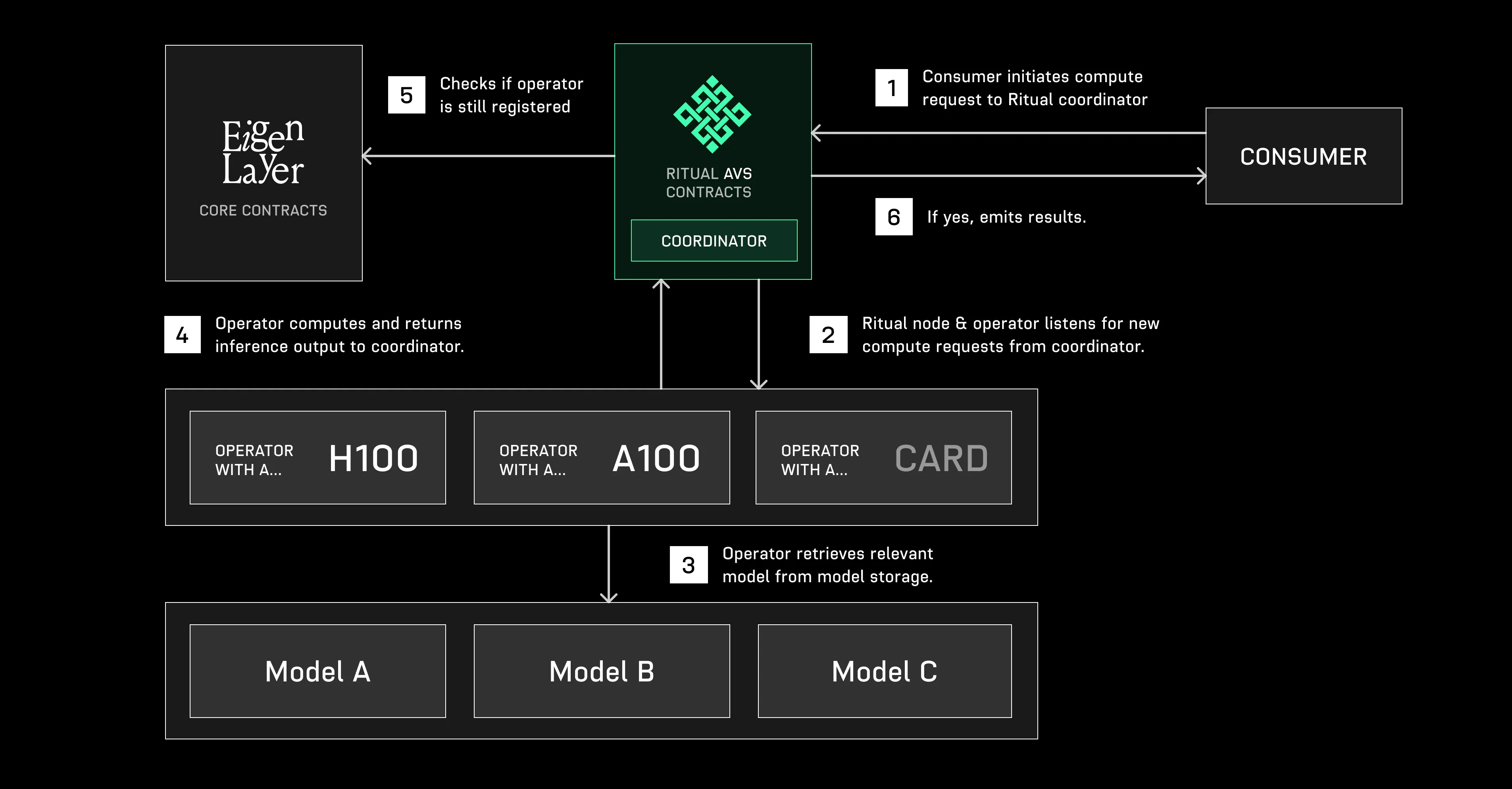
EigenLayer’s economic model relies on a four-part flow connecting Ethereum restakers, operators, Autonomous Verifiable Services (AVS), and the consumers who pay for those services. Understanding this chain is essential for assessing how value accrues to participants in the restaking ecosystem.
At the center of this structure are restakers and operators. Restakers deposit liquid staking tokens (LSTs) into EigenLayer, effectively locking their capital to provide security to the network. Operators are the entities that run the necessary infrastructure—servers, validators, and software—to deliver this security. In return, operators earn fees from the AVSs they support. This division of labor allows restakers to earn yield without managing technical infrastructure, while operators monetize their computational resources.
The value creation happens at the AVS layer. An AVS is a specific service, such as a decentralized oracle network or a data availability layer, that requests security from EigenLayer. AVS developers pay operators in tokens or fees to have their service validated by the pooled staked assets. This creates a direct market for security: if an AVS is popular and generates revenue, operators are incentivized to secure it, which in turn increases demand for restaking.
Finally, AVS consumers drive the entire cycle. These are the end-users or applications that pay for the services provided by the AVS. Their payments flow to the AVS operator, who then distributes a portion of those fees to the restakers as yield. This bottom-up revenue model ensures that restaking yields are not just speculative but are backed by real-world utility and demand for specific cryptographic services.
The value of this ecosystem is closely tied to the performance of its native asset. As demand for AVS services grows, the underlying economic activity supports the broader market valuation of the protocol.
Operator fee structures
Operators on EigenLayer do not rely on a single revenue stream. Instead, they build income by layering performance fees, service premiums, and penalty avoidance across multiple Actively Validated Services (AVS). This multi-layered approach allows validators to maximize returns while managing the unique risks of restaking.
Performance fees and service premiums
The primary income source comes from performance fees charged to AVS consumers. Operators charge a percentage of the value secured or processed. For example, an oracle AVS might take a small fee per data request, while a ZK coprocessor charges based on computation complexity. These fees vary by service type, with high-throughput services often commanding higher premiums due to resource intensity.
Service-specific premiums add another layer. Operators may charge extra for priority processing or guaranteed uptime. This creates a tiered pricing model where consumers pay more for reliability. The structure encourages operators to maintain high performance standards to retain these premium contracts.
Slashing penalties and risk management
Slashing penalties act as a counterweight to potential profits. If an operator fails to meet AVS requirements, a portion of their staked ETH is forfeited. This risk forces operators to maintain robust infrastructure and monitoring systems. The threat of slashing ensures that fee structures include a risk premium, compensating operators for the possibility of loss.
Effective risk management involves diversifying across multiple AVSs. By spreading stakes, operators reduce the impact of a single slashing event. This strategy stabilizes income and protects against the volatility inherent in early-stage restaking protocols.
Comparing fee models across AVS types
Different AVS categories exhibit distinct fee structures. Oracle services typically use per-request fees, while data availability layers charge based on data volume. ZK coprocessors often use computational unit pricing. Understanding these differences helps operators choose which services to support.
| AVS Type | Primary Fee Model | Slashing Risk Profile |
|---|---|---|
| Oracle | Per-request | Low |
| Data Availability | Per-byte | Medium |
| ZK Coprocessor | Per-compute-unit | High |
Operators must balance these factors to create a sustainable revenue model. The goal is to maximize fee income while minimizing the probability and impact of slashing events. This requires continuous monitoring and adaptation to the evolving EigenLayer ecosystem.
Active validator set dynamics
The size and quality of the active validator set directly dictate the stability of AVS revenue streams. In the EigenLayer ecosystem, restakers commit their cryptoeconomic security to multiple Actively Validated Services (AVSs). This creates a shared pool of security that must be distributed across diverse workloads, from data availability layers to oracle networks.
A larger validator set generally improves network resilience and decentralization, but it also introduces complexity in reward distribution. When the active set is healthy and diverse, revenue is more stable because it is not overly reliant on a single AVS's performance. Conversely, a shrinking or concentrated validator set can lead to volatile yields, as the remaining participants bear a disproportionate share of slashing risks and operational costs.
The quality of validators matters as much as the quantity. Validators with robust infrastructure and strong risk management protocols are better equipped to handle the multi-service slashing conditions inherent in restaking. This reliability attracts more AVS operators, creating a positive feedback loop that enhances overall network security and revenue potential.
For those looking to participate in this ecosystem, having the right tools is essential. Proper hardware configuration and monitoring software can significantly impact a validator's ability to remain online and avoid penalties.


As an Amazon Associate, we may earn from qualifying purchases.
The shift toward service-based infrastructure revenue
By 2026, the EigenLayer ecosystem is moving beyond simple restaking yields toward more complex, service-based revenue models. Autonomous Verifiable Services (AVS) are no longer just security providers; they are becoming essential data and compute layers for decentralized applications. This shift reflects a broader trend in crypto infrastructure where value accrues to services that actively solve specific network bottlenecks rather than just securing the base layer.
The market is increasingly rewarding AVS that offer tangible utility, such as data availability solutions or specialized oracle services. Investors and operators are looking for sustainable revenue streams that can withstand market volatility. This transition is evident in the growing number of AVS projects that charge for specific computational tasks or data verification services, creating a more robust economic model for the entire ecosystem.
To understand the broader market context, it is helpful to look at the performance of the underlying assets that secure these services. The following chart shows the recent price action of Ethereum, which serves as the primary collateral for most AVS operators.
The transition to service-based revenue also impacts how operators allocate their resources. Instead of simply staking ETH for yield, operators are now evaluating the potential returns from providing specific AVS services. This requires a more nuanced understanding of the technical requirements and market demand for each service. The following comparison highlights the key differences between traditional restaking and active AVS participation.
| Feature | Traditional Restaking | Active AVS Participation |
|---|---|---|
| Revenue Source | Passive yield | Service fees + yield |
| Risk Profile | Lower | Higher |
| Technical Requirement | Minimal | High |
This evolution is not just about higher returns; it is about building a more resilient and diversified infrastructure layer. As AVS become more integrated into the daily operations of decentralized applications, their revenue models will likely become more sophisticated, incorporating dynamic pricing and usage-based billing. This trend is expected to continue throughout 2026, with more projects exploring innovative ways to monetize their services while maintaining the security and decentralization that EigenLayer provides.
For those looking to participate in this evolving landscape, it is important to stay informed about the latest developments in the AVS space. The following resources provide detailed information on building and operating AVS on EigenLayer.
No comments yet. Be the first to share your thoughts!