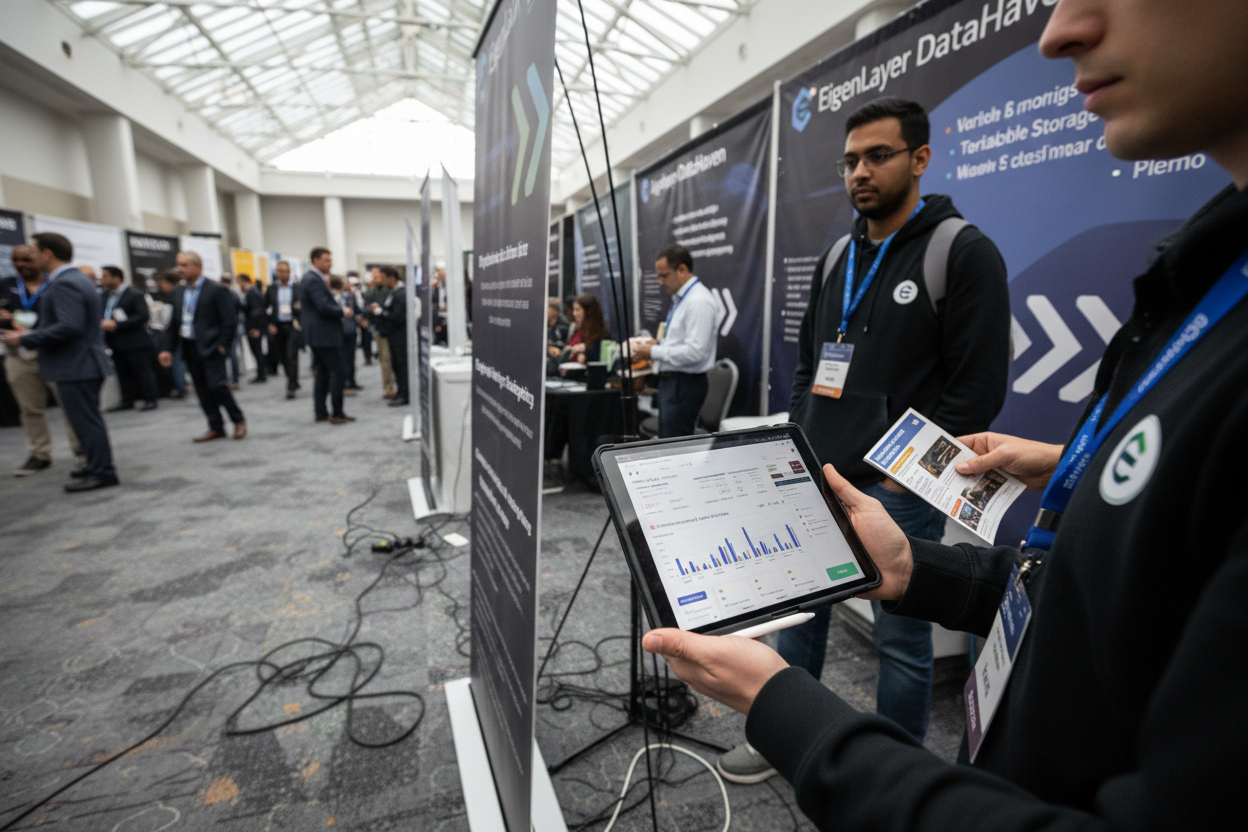
As Ethereum restaking matures in 2026, becoming an EigenLayer node operator offers a pragmatic way to earn yields while securing Actively Validated Services (AVSs). With shared security now a cornerstone of the ecosystem, operators play a pivotal role in scaling decentralized infrastructure. This guide dives into the eigenlayer node operator setup, starting with hardware requirements and initial installation steps tailored for the current mainnet environment.

EigenLayer Hardware Requirements 2026: Building a Robust Foundation
Choosing the right hardware is non-negotiable for reliable performance. Skimp here, and you’ll face downtime penalties that erode your stake. Based on the latest EigenLayer documentation and operator experiences, the minimum specs for 2026 ensure you handle AVS duties without bottlenecks.
EigenLayer Node Operator Hardware Requirements 2026
| Requirement | CPU Cores | RAM (GB) | Storage (SSD GB) | OS |
|---|---|---|---|---|
| Minimum | 4 | 16 | 50 | Ubuntu 24.04 LTS |
| Recommended | 8 | 32 | 200 | Ubuntu 24.04 LTS |
These specs support up to standard throughput for most AVSs, like EigenDA, where storage scales with data demands. I recommend AMD CPUs for cost-efficiency; they’ve proven stable in production setups. Pair this with NVMe SSDs for I/O intensive tasks. Cloud equivalents? AWS c6gd. large or similar deliver the punch without upfront hardware costs. In my view, overprovisioning RAM by 50% future-proofs against growing AVS complexity.
Software Prerequisites for EigenLayer AVS Operator Guide
Before firing up your node, align your software stack. Ubuntu 24.04 LTS remains the gold standard for its long-term support and package stability. Docker 24 and is mandatory; it containerizes the operator software, simplifying deployments across environments.
Install Docker via official repos to avoid version mismatches. The EigenLayer CLI, your command-line workhorse, handles key generation and registration. Expect to need Go for dependencies. Pro tip: Use managed RPCs like Alchemy or Infura initially; self-hosting a full node adds latency risks for newcomers. This setup keeps your eigenlayer hardware requirements 2026 lean while maximizing uptime.
Step-by-Step EigenLayer Node Installation: From Wallet to Registration
With hardware humming and software ready, kick off the ethereum restaking node installation. First, update your system: sudo apt update and amp; and amp; sudo apt upgrade -y. Install Docker if missing: follow the script from get. docker. com.
Download, Verify, and Install EigenLayer CLI Binary
Begin by downloading the latest EigenLayer CLI binary from the official GitHub releases page. This process fetches the most recent version, verifies its integrity using SHA256 checksums, extracts the binary, and installs it system-wide for easy access. Run these commands in your terminal as a non-root user (sudo will be prompted where needed). Ensure you have curl, tar, and sha256sum available.
# Download and install the latest EigenLayer CLI

LATEST_VERSION=$(curl -s https://api.github.com/repos/LayrLabs/eigenlayer-cli/releases/latest | grep '"tag_name":' | sed -E 's/.*"([^"]+)".*/\1/')
echo "Latest version: $LATEST_VERSION"

# Download the binary archive for AMD64 (adjust for ARM if needed)
curl -L -o "eigenlayer.tar.gz" "https://github.com/LayrLabs/eigenlayer-cli/releases/download/${LATEST_VERSION}/eigenlayer-${LATEST_VERSION}_linux_amd64.tar.gz"

# Download checksums
curl -L -o checksums.txt "https://github.com/LayrLabs/eigenlayer-cli/releases/download/${LATEST_VERSION}/checksums.txt"

# Verify checksum
if grep "eigenlayer-${LATEST_VERSION}_linux_amd64.tar.gz" checksums.txt | sha256sum --check; then
  echo "Checksum verified successfully."
else
  echo "Checksum verification failed. Aborting."
  exit 1
fi

# Extract the binary
tar -xzf eigenlayer.tar.gz

# Install
chmod +x eigenlayer
sudo mv eigenlayer /usr/local/bin/

# Cleanup
rm eigenlayer.tar.gz checksums.txt

echo "EigenLayer CLI v${LATEST_VERSION} installed successfully!"
Verify the installation:
“`bash
eigenlayer version
“`
You should see output confirming the installed version. With the CLI ready, you can now proceed to initialize your EigenLayer node.
Next, grab the EigenLayer CLI. Download the binary from the official GitHub releases or build from source. Verify integrity with checksums; security breaches here cost stakes. Generate your keys: . /eigenlayer create-ecdsa-keypair --private-key-path. /ecdsakeys --pubkey-out. /ecdsapubkey. json, then repeat for BLS: . /eigenlayer create-bls-keypair --private-key-path. /blskeys. Back these up offline; mnemonic phrases are your lifeline.
Fund the ECDSA address with at least 0.3 ETH. Bridge from Ethereum mainnet if needed. Register as an operator via CLI: . /eigenlayer register-operator --ecdsa-pubkey. /ecdsapubkey. json --bls-pubkey. /blskeys/pubkey. json --aws-metadata-uri and lt;your-metadata-url and gt;. Metadata JSON goes on IPFS or a static host, detailing your capabilities.
Operators need delegation too. Minimums hover around meaningful stakes; aim for 32 ETH equivalent in restaked assets to enter active sets. Monitor via EigenLayer explorers. This phase tests your setup’s resilience; iterate on configs before going live.
Configuring Docker for the operator container comes next. Pull the image, mount volumes for keys and data, expose ports. Environment vars link your RPC endpoints and AVS specifics. In practice, systemd services ensure auto-restarts, crucial for slashing avoidance.
Docker Compose shines here for multi-container orchestration, especially when layering an Ethereum node or AVS middleware. Craft a docker-compose. yml with the official EigenLayer image, binding your keys securely via secrets or volumes. Expose port 9000 for P2P and 8545 for RPC if needed.
Spin it up with docker compose up -d. Tail logs immediately: docker compose logs -f operator. Expect initial sync times of hours, depending on your eigenlayer hardware requirements 2026. Verify health via CLI: . /eigenlayer operator status. This command polls your node’s pubkeys against the registry, confirming active status.
Opting into AVSs: Activating Your Earnings Engine
Registration complete? Time to opt into AVSs, the real yield generators. Use the CLI: . /eigenlayer avs opt-in --avs your-avs-name --pubkey. /blskeys/pubkey. json. Each AVS has unique middleware; EigenDA demands extra storage tuning for 100 MB/s bursts. Check AVS dashboards for operator quotas; popular ones fill fast.
Delegation is the bottleneck. Stakers delegate via EigenLayer’s portal or CLI. Target 32 ETH minimum to compete in active sets, where operators with 1.1x the lowest stake stay viable. Track via explorers like eigenlayer. xyz. In 2026, middleware upgrades mean smoother delegation flows, but competition stiffens yields to 5-10% APY risk-adjusted.
Pro tip: Diversify across AVSs early. Bridge security reduces correlated slashing risks, a pragmatic hedge I’ve seen pay off in testnets. Run eigenlayer avs list to scout opportunities matching your hardware.
Ongoing Operations: Monitoring and Optimization for How to Run EigenLayer Node
Uptime defines profitability. Slashing kicks in for prolonged downtime or misbehavior, clawing 1-5% of stake. Systemd integration is essential: create a service file pointing to your Docker Compose, enabling restarts on failure.
Essential Monitoring Metrics for EigenLayer AVS Operator
| Metric | Target | Tool |
|---|---|---|
| Uptime | 99.9% | Prometheus |
| Sync Status | Synced | Node Exporter |
| Delegation Amount | >32 ETH | EigenLayer Explorer |
| CPU Usage | <80% | Grafana |
| Storage Free | >20% | df -h |
Deploy Prometheus and Grafana for dashboards; alert on CPU spikes or lag. Offsite backups of keys and data prevent catastrophe. Rotate keys quarterly if AVS protocols evolve. For scaling, cluster across regions; EigenCloud’s managed options suit low-touch operators chasing passive income.
Security demands vigilance. Firewall ports tightly, use fail2ban against SSH probes. Hardware wallets for delegation signing add layers, though CLI mnemonics suffice for most. Audit logs weekly; anomalies signal attacks.
Costs? Electricity and cloud run $50-200 monthly on recommended specs, offset by rewards. Tune for efficiency: undervolt CPUs, snapshot storage. As Ethereum’s Dencun upgrade ripples through, expect lighter footprints, boosting margins.
Mastering this eigenlayer avs operator guide positions you at DeFi’s frontier. Operators who iterate configs and monitor religiously outpace casual runners. With restaking TVL cresting new highs, your node contributes to Ethereum’s scalability while compounding returns. Dive in, stay disciplined, and watch shared security redefine staking economics.
About the Author